

to break off
 28
2.8
28
2.8

- phrasal verb
- /breɪk ɔf/
- The branch broke off during the storm and fell to the ground.
Loading YouTube…
Watch on YouTubeAnd then this one nail just like broke off my nail.
- And then this one nail just like broke off my nail.
- He picks up the cactus, walks through a doorway and breaks off another arm.
- But hey, I had a pulmonary embolism, which means a piece of blood clot broke off and went to my lungs.
- They both do and and so that's why I decided to break off, went to college, got my masters and decided to.
- But mostly I know that if people like what I'm doing, it's not because they want to break off a chunk of that.
Examples
-
First my music career was sabotaged, and then Chris became unreasonable, and I had to break off our engagement.
-
All right, let's break off a piece over here.
-
I broke off a chunk of the gold.
-
I need you to break off a chunk, I need you to put it in a bag.
-
The antenna probably broke off in the crash.
-
I got to a weeping willow tree where I broke off a branch.
Fiction book (1997) -
This rain of debris causes parts of the lunar rocks to break off, creating a layer of fine dust on the lunar surface.
-
These rocks you see strewn down the hillside, they were broken off by the ice.
-
This bloke said that, what had happened, was a piece of the axe head had broken off and come up and hit him in the eye.
-
Her lips close on it, sucking, and he twists it gently to break off a piece in her mouth.
Fiction book (1998)
Synonyms
 ∞
1.0
∞
1.0
To change a large bill into smaller bills
 575
2.3
575
2.3
End a relationship or go separate ways
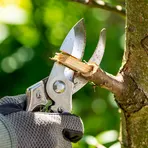 190
4.1
190
4.1
To remove something by cutting it away from what it is attached to
 161
3.5
161
3.5
To separate something so it is no longer joined, for example remove a cable or turn off power
 131
3.5
131
3.5
To become loose and fall off
 117
2.3
117
2.3
Separate from something by breaking or dropping
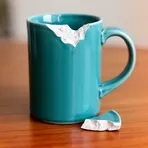 104
2.3
104
2.3
To break off a small piece of an object
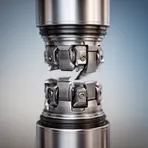 82
5.3
82
5.3
To stop being part of or connected to something
 66
2.7
66
2.7
Separate something into smaller pieces
 50
3.0
50
3.0
To separate something into parts so it can be moved or fixed
 47
2.6
47
2.6
To divide something into smaller parts
 44
3.1
44
3.1
To break into pieces or fall into separate parts
 41
2.7
41
2.7
To take something off from where it is attached
 26
3.0
26
3.0
To separate into pieces, for example a machine or a group
 24
4.8
24
4.8
To pull something out with force
 21
3.2
21
3.2
To break something into pieces by hand
 16
4.0
16
4.0
To come apart from something it is connected to
 12
3.0
12
3.0
To pull something off quickly until it rips
 9
3.5
9
3.5
To break a piece from something with a quick, sharp movement
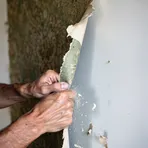 6
4.5
6
4.5
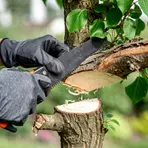
To pull something off quickly with force
 5
3.4
5
3.4
To remove a part from something with a knife or tool
 5
5.3
5
5.3
To disconnect two things that are joined, often machine parts
 4
6.7
4
6.7
Disconnect parts that were joined so they work independently
 3
3.2
3
3.2
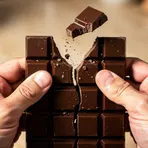
Break a small piece from something by hitting or pressing it
 2
3.5
2
3.5
To come off a larger thing, often because of force or damage
 1
6.1
1
6.1
To separate something from what it is connected to
 1
9.9
1
9.9
To cut or separate something into parts, often by breaking it
Antonyms

How Detached

Surface Forms
Morphology
The components 'break' (to stop or interrupt) and 'off' (away/separation) combine to signal ending or separation, so a learner who knows both words can partly infer that it means to stop or end something. However, the specific nuance of a sudden or partial interruption (e.g., breaking off a conversation or relationship) and the phrasal-verb usage in abstract contexts may not be fully predictable without exposure, so it is only partially transparent.
Etymology
Break off comes from the simple image of breaking a small piece away from something larger: you break it off, like a branch or a piece of chocolate. That's why it means 'to detach'.