

to connect
 278
1.1
278
1.1

- verb
- /kəˈnɛkt/
- When you connect the puzzle pieces, the picture will finally become clear.
- physically connect
- connect to the mountains
- connect wires
Loading YouTube…
Watch on YouTubeSo remember that your eyes are connected directly to your brain.
- So remember that your eyes are connected directly to your brain.
- Now we can probably even connect a little bit more as well.
Examples
-
This lake does connect to the ocean.
-
And then I'm going to connect all the dots together.
-
So what you do is you can connect your little leaves.
-
Now we can probably even connect a little bit more as well.
-
So now what you want to do is connect this space.
-
Thanks. OK, Do I connect this to the top? Absolutely.
-
For most of my childhood, River Street connected me to the rest of the world.
Academic text (2011) -
This ventilation shaft connects to the forward hold.
-
The front of this space is demarcated by a prominent lip connecting the structures.
Academic text (2012) -
Spread your mycelial threads underground and connect them out of sight.
Synonyms
 ∞
2.1
∞
2.1
To join people or things into one group for a shared purpose
 ∞
1.0
∞
1.0
Connect two things so they become attached
 988
2.8
988
2.8
To make something by joining parts, like a model, plan or team
 923
1.0
923
1.0
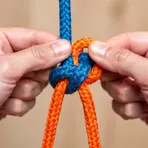
To fasten things together by making a knot with string or rope
 459
2.5
459
2.5
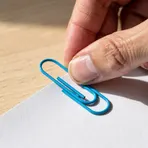
To join or fasten one thing to another so they stay together
 442
1.1
442
1.1
To join two things together physically
 130
2.3
130
2.3
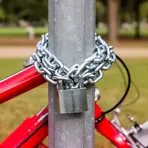
To fasten things together using metal links
 115
2.2
115
2.2
To join two people or things so they work together
 90
3.4
90
3.4
Keep parts or people joined and working as one
 89
4.2
89
4.2
To join parts together to make something whole
 62
3.5
62
3.5
To make cloth by crossing threads or to join things into a single piece
 26
5.9
26
5.9
To come together or bring things together
 16
4.1
16
4.1
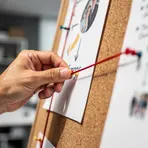
To connect to another idea or fact in a clear way
 10
3.6
10
3.6
To make people feel close and united
 9
3.0
9
3.0
To join people, places, or things so they become connected
 7
2.3
7
2.3
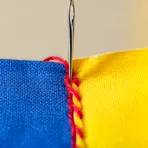
To join two pieces of cloth with a needle and thread
 5
4.7
5
4.7
Join things so they can work together
 4
4.5
4
4.5
Connect things so they depend on each other
 2
4.6
2
4.6
To fit together so the parts make sense as a whole
 2
3.9
2
3.9
Make people or groups work closely together as one
 1
3.7
1
3.7
To connect devices or systems so they can work together
 1
3.3
1
3.3
To join machines so they can share power or information using wires
 1
4.9
1
4.9
To build the basic wooden structure of a building like a house
 1
5.3
1
5.3
To fasten two parts together so they form one piece
 1
6.5
1
6.5
To join one thing to another as an extra, often by a mechanical or formal connection
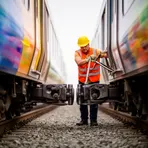
To join two machines or vehicles so they are connected

To link things together in a chain
Antonyms

 161
3.5
161
3.5
To separate something so it is no longer joined, for example remove a cable or turn off power
Phrasal Verbs


- Texting
2
2.0
To make a computer or phone use the internet so it can send and receive data
How Connected

Surface Forms
Morphology
connect = con + nect
The verb is historically con- + nect, but 'nect' is not a standalone English word and the Latin combining forms are not recognizable to typical learners, so the components do not help infer meaning.
Etymology
Connect comes from the Latin parts con- 'together' and nectere 'to bind'. So to connect things physically is to 'bind together' or join them so they form one whole.