
About Glite Dictionary
A new kind of English dictionary, in every sense of the word.
Imagine watching a scene in English. Someone says a phrase you sort of know. You pause, open a dictionary, type the word, and get a wall of meanings.
That is where many dictionaries quietly give up. They treat English like a museum: words pinned under glass, labelled, sorted, and left there.
But English does not live under glass.
What you will not find in ordinary dictionaries is this full sense-level package:
- 1. One page per meaning: bank account and river bank are separate.
- 2. Video examples: real scenes for this exact sense.
- 3. Sense pictures: the image matches the meaning.
- 4. Real audio: natural speech, not only pronunciation.
- 5. Meaning difficulty: how hard this sense is.
- 6. Meaning frequency: how often this sense appears.
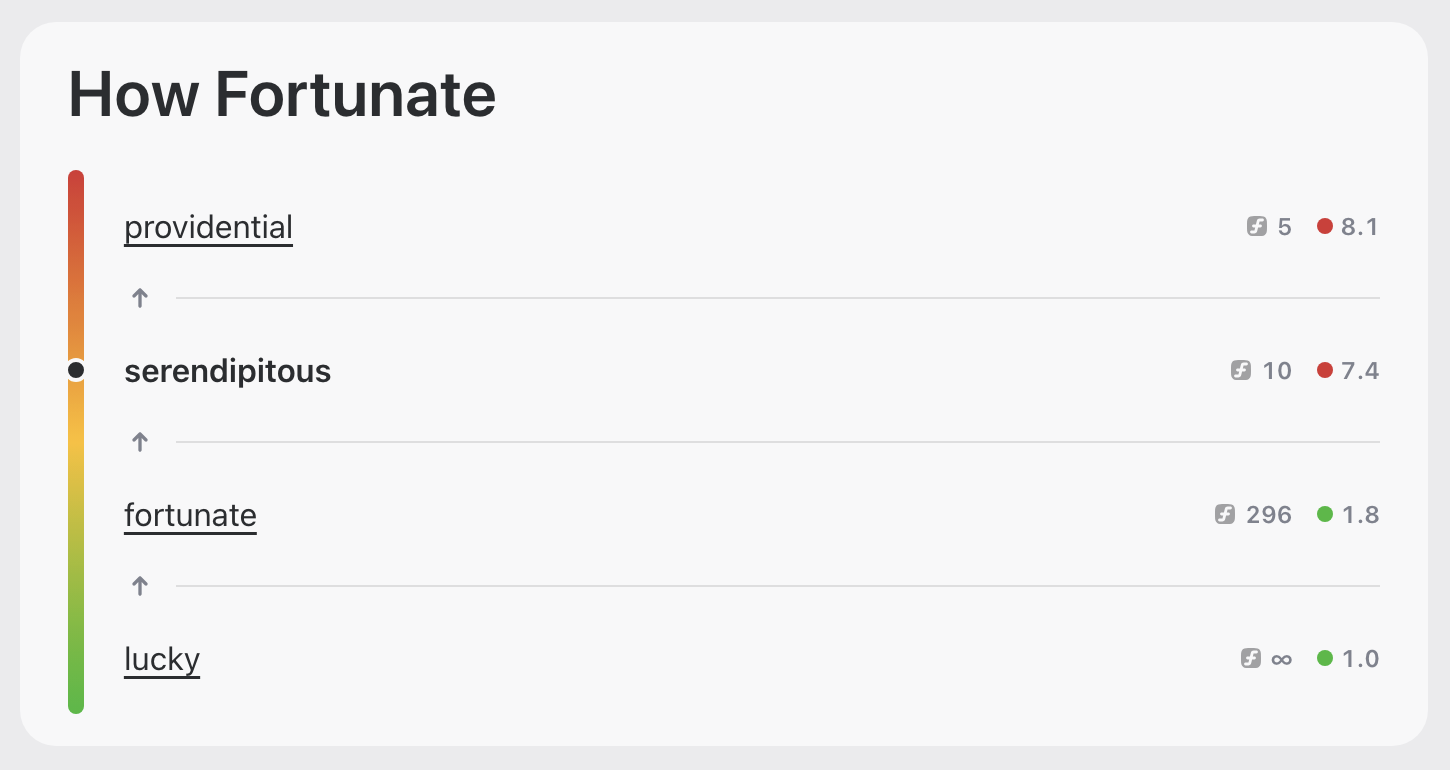
- 7. Power grades: nearby words ordered by strength.
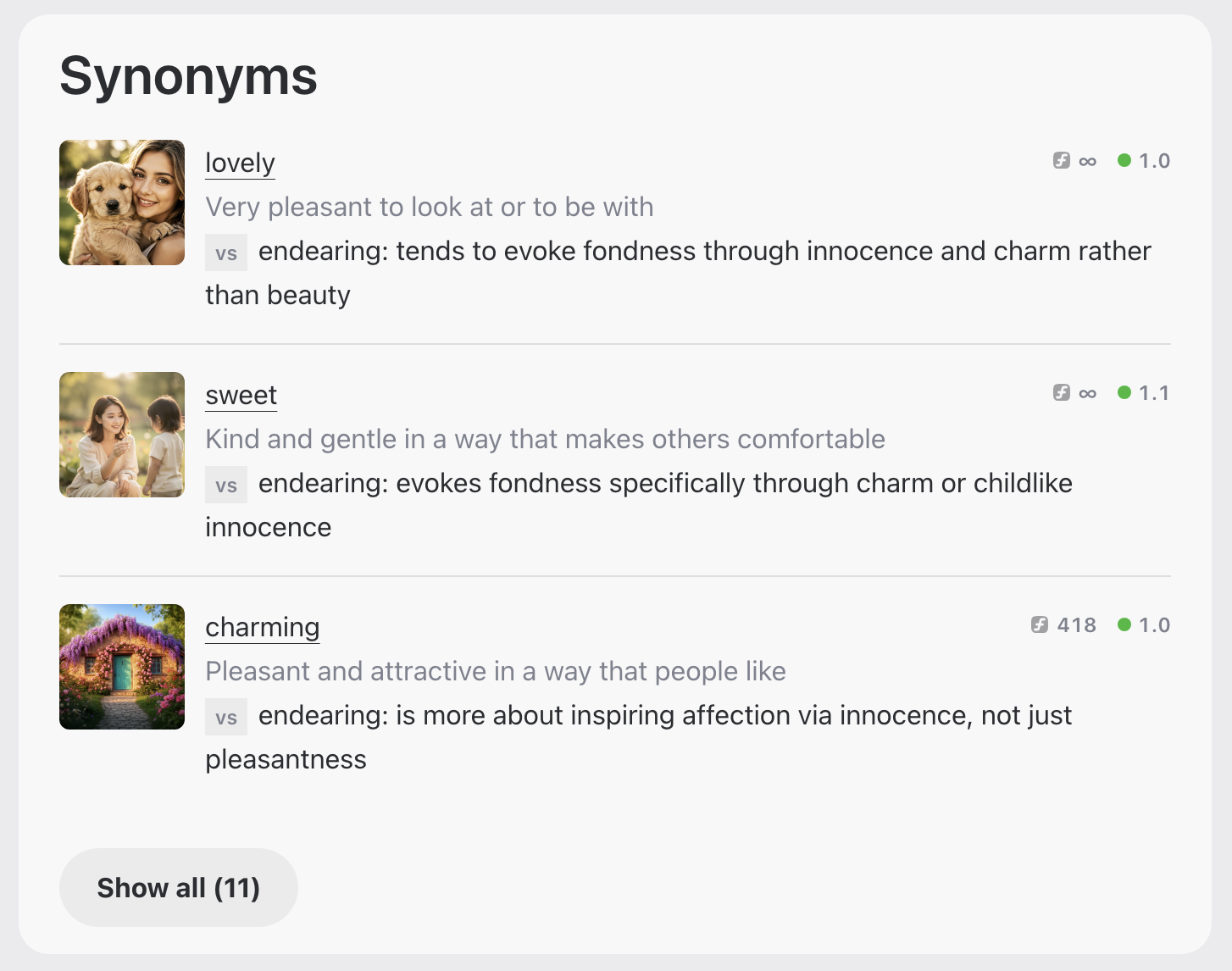
- 8. Explained synonyms: close words compared, not listed.
What if every meaning had its own room?
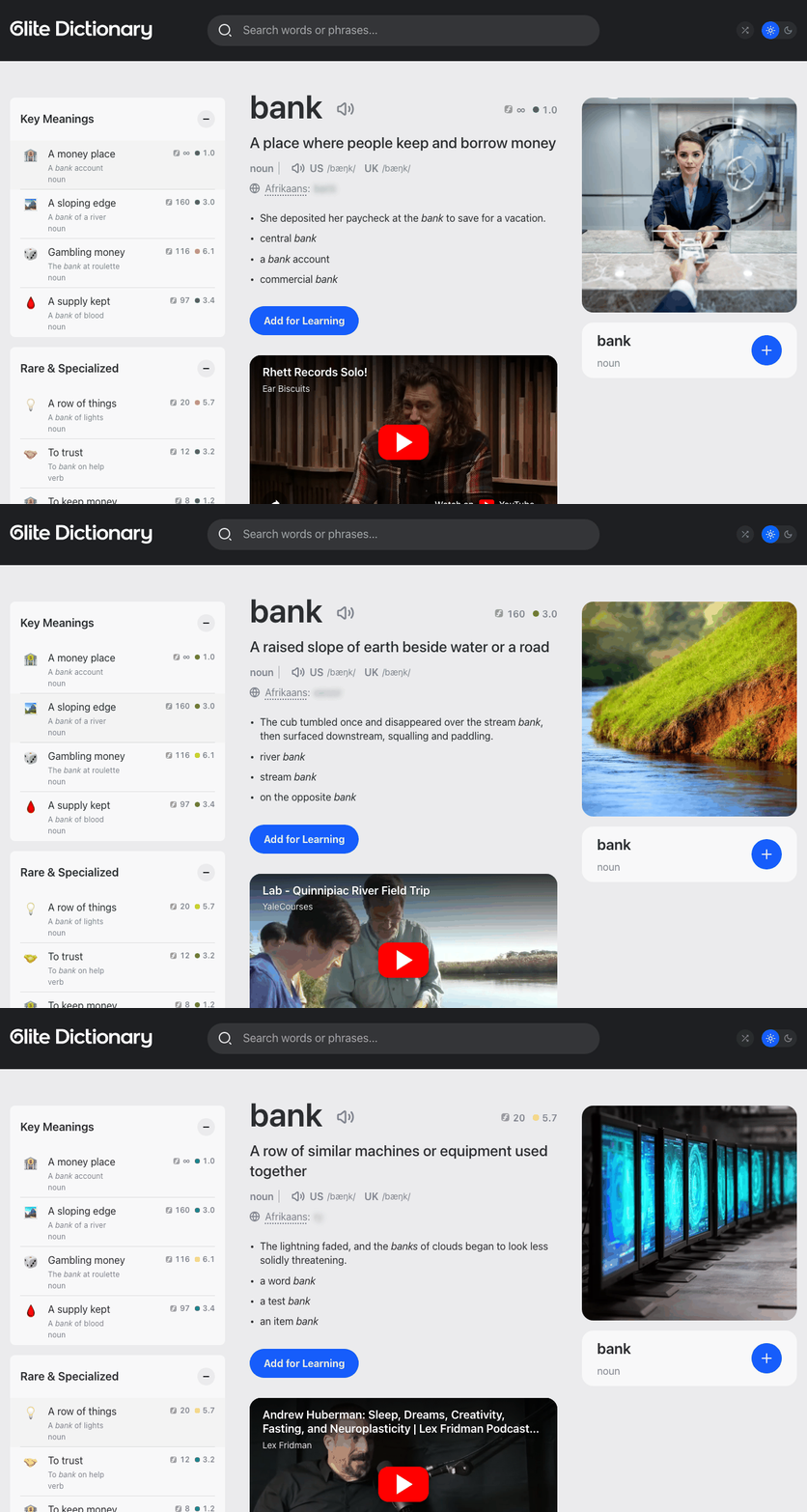
Take a word like bank. A child learns the money place first. Easy.
Then English does what English always does: it starts misbehaving. A river has a bank. A hospital has a blood bank. A wall can have a bank of lights. A plane can bank. You can bank on a friend.
Same word. Different worlds.
Glite Dictionary treats each meaning as something worth understanding on its own. Every sense can have its own definition, examples, image, video, pronunciation, frequency, difficulty, related words, translations, forms, and learning context.
Why should a dictionary show video?
Most dictionaries give you text. Maybe audio. That is useful, but it misses the moment where learners often get lost.
A learner does not need a video for the headword bank. They need evidence for this exact sense of bank. A bank teller does not explain a river bank. A row of computer screens does not explain to bank on a friend.
So Glite connects examples to meanings. The video is not decoration — it is the scene where the meaning lives.
Will I meet this word again?
A raw count like 20 per million can be useful for linguists. For learners, it feels like being handed a speedometer with no car attached.
Glite reframes frequency as an estimate of how often an average American adult may meet a meaning in a year. It also shows where the word appears — TV, social media, reading, and spoken English.
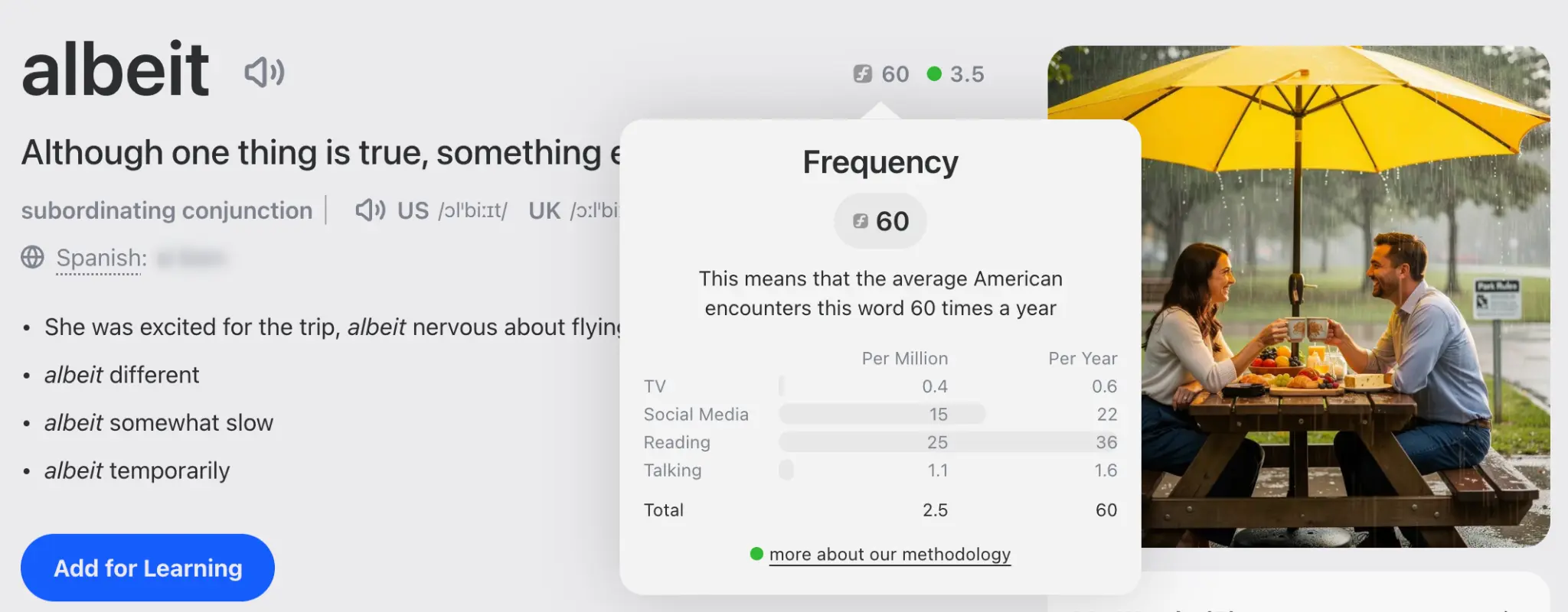
If a word is common, it deserves attention. If it is rare, maybe it can wait. Frequency becomes a compass.
Why can a short word be hard?
Some short words are hard. Some long words are easy. Some common words become hard only in one sense. English is full of traps like this.
That is why Glite shows difficulty on a learner-facing 1.0 to 9.9 scale. One means almost everyone knows it. 9.9 means almost no one does.
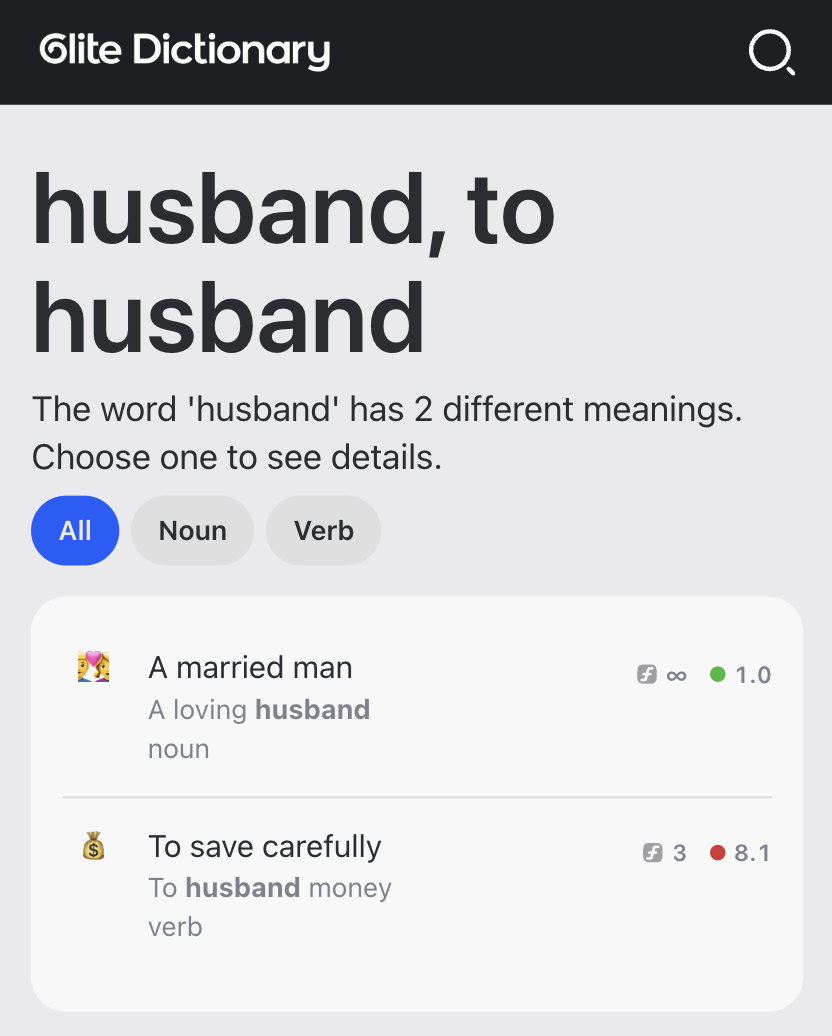
Wait — do we measure every meaning directly from learners? Not yet. For some meanings, we use real learner test data. For others, we estimate from the sense itself and keep improving the data as Glite grows.
How do nearby words differ?
At some point, English stops being only about knowing a word. It becomes about choosing the right one.
A thesaurus can give a list. But a list is not enough. Lucky, fortunate, serendipitous, and blessed live near each other, but they are not the same.
What happens after lookup?
Looking up a word once is useful. But we all know the feeling: you understand it today, then meet it two weeks later and it feels new again.
That is why the dictionary belongs inside the larger Glite learning loop. Meet a word. Find the sense. See and hear it. Add it for learning. Review it later.
We are not talking about a longer dictionary entry. We are talking about moving from word lookup to word learning.
In five years, a dictionary that cannot show the sound, scene, level, and exact sense of a word will feel strangely flat. Like a map with only street names and no roads.

