
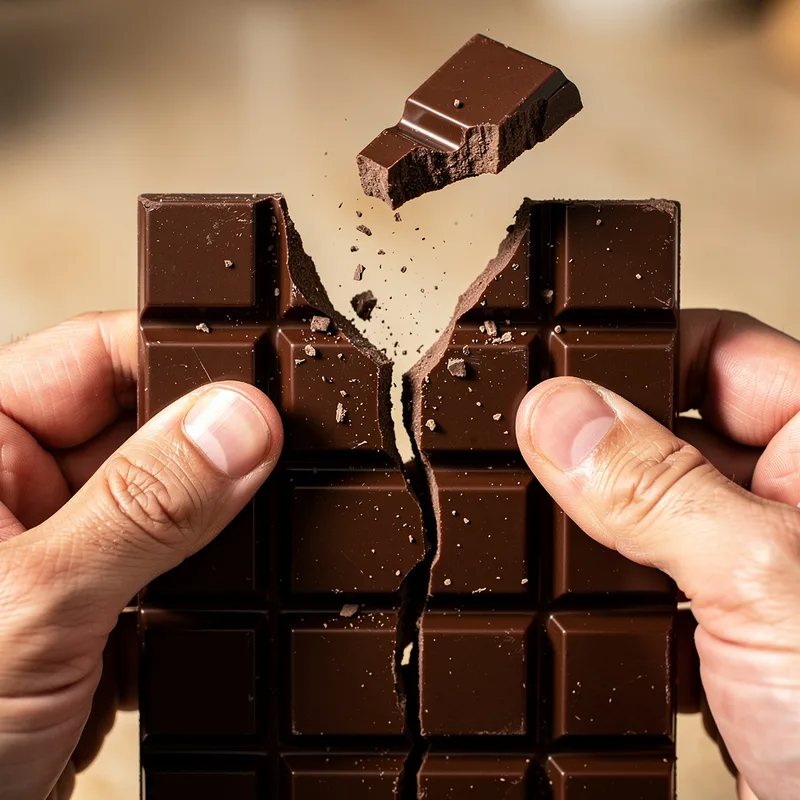
to break away
 2
3.5
2
3.5

- phrasal verb
- /breɪk əˈweɪ/
- During the storm, several chunks of ice break away from the glacier and floated off into the sea.
Loading YouTube…
Watch on YouTubeOh how cute, it says crack a smile as his outer shell breaks away.
- Oh how cute, it says crack a smile as his outer shell breaks away.
- But what we did is we began roller milling it and breaking away the fibre from the starch, as Tim says, the sugar.
Examples
-
As the earthquake struck, pieces of the road began to break away, creating dangerous cracks.
-
A second crag broke away, moved upward into the sky to catch the wind.
Fiction book (1993) -
Moments ago, sections of the New York state coastline broke away.
-
In front of them, the concrete railing has broken away.
Fiction book (1997) -
Rather, they break away from the foam material as tiny particles, which then become part of your house dust.
Blog text (11) -
In addition, a 200-foot-high vertical scarp remained where the waste mass had broken away from the landfill.
Academic text (1997) -
With the satisfying sound of PVA breaking away from a surface, the halves popped free.
Blog text (13) -
The driver's side door was jammed, the windshield in gummy pieces throughout the interior, and the rear seat had broken away from the floor on one side.
Fiction book (1999) -
A spring at the upper edge of the bog swelled, and the main body of peat broke away from the subsoil, sliding downward in glacier-like fashion.
Academic text (2002) -
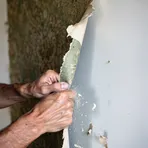
The old paint was starting to break away from the wall, revealing the bare bricks underneath.
Synonyms
 ∞
1.0
∞
1.0
To change a large bill into smaller bills
 ∞
1.0
∞
1.0
To pull something so it breaks into pieces
 575
2.3
575
2.3
End a relationship or go separate ways
 481
2.9
481
2.9
To move apart or stop being together
 161
3.5
161
3.5
To separate something so it is no longer joined, for example remove a cable or turn off power
 155
2.8
155
2.8
To break into pieces or stop working properly
 131
3.5
131
3.5
To become loose and fall off
 117
2.3
117
2.3
Separate from something by breaking or dropping
 104
2.3
104
2.3
To break off a small piece of an object
 82
5.3
82
5.3
To stop being part of or connected to something
 72
2.8
72
2.8
To break suddenly into many small pieces, like glass
 50
3.0
50
3.0
To separate something into parts so it can be moved or fixed
 44
3.1
44
3.1
To break into pieces or fall into separate parts
 39
3.7
39
3.7
To break into small pieces or make something break apart
 28
2.8
28
2.8
To make a piece come away from something by hitting or bending it
 26
3.0
26
3.0
To separate into pieces, for example a machine or a group
 21
3.2
21
3.2
To break something into pieces by hand
 21
3.9
21
3.9
To break into many small, sharp pieces like wood or glass
 16
4.0
16
4.0
To come apart from something it is connected to
 12
3.0
12
3.0
To pull something off quickly until it rips
 9
3.5
9
3.5
To break a piece from something with a quick, sharp movement
 8
3.9
8
3.9
To force yourself free from a place or person
 6
4.5
6
4.5
To pull something off quickly with force
 5
5.3
5
5.3
To disconnect two things that are joined, often machine parts
 3
3.2
3
3.2
Break a small piece from something by hitting or pressing it
Antonyms

How Detached

Surface Forms
Morphology
The meaning 'to separate or detach' is directly and predictably derived from combining 'break' (to cause something to separate) with 'away' (movement or separation to another location), so a learner who knows both words can infer the MWE meaning. This verb+particle composition is a common, compositional pattern in English (and mirrored in many languages), making it immediately comprehensible to B1 learners.
Etymology
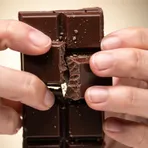
Break away shows something coming off the whole: to break and move away, like snapping a piece of chocolate from a bar. So it means 'to separate' or detach a piece from the rest.