

to come apart
 44
3.1
44
3.1

- phrasal verb
- /kʌm əˈpɑrt/
- When the storm hit, the old shed finally came apart in the strong winds.
- come apart at the seams
Loading YouTube…
Watch on YouTubeHopefully that will help the roots kind of come apart gently.
- Hopefully that will help the roots kind of come apart gently.
- Suddenly the child appreciates that the word he hears comes apart into smaller pieces of sound.
- Oh, Oh no, OK, that's coming apart.
- And the seals, the night stalkers came apart, littered on the side of that mountain.
- So as we met her, well, she was kind of a hot mess and actively coming apart.
Examples
-
So actually these Wind Force GB cards come apart really easily.
-
This place is coming apart.
-
Most of these will come apart into multiple pieces.
-
So when it came apart originally, this glass did pop out.
-
So then these come apart nicely.
-
Society is coming apart at the seams, okay?
-
Many of them wore fabric clothes that were coming apart at the seams.
Fiction book (1994) -
Then the chromosomes come apart, the two nuclei separate, and the double cell once again becomes two.
Academic text (2002) -
The ship's coming apart.
-
The old toy began to come apart after years of rough play.
Synonyms
 ∞
1.0
∞
1.0
To change a large bill into smaller bills
 ∞
1.0
∞
1.0
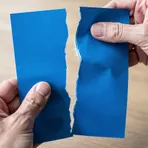
To pull something so it breaks into pieces
 513
1.3
513
1.3
To break something into two or more parts
 297
1.9
297
1.9
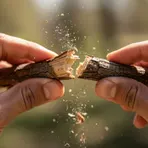
To break into parts or pieces
 241
2.9
241
2.9
To separate and move in different directions after being together
 177
3.4
177
3.4
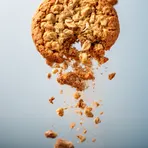
To break into small pieces or become weaker and collapse
 155
2.8
155
2.8
To break into pieces or stop working properly
 95
6.8
95
6.8
To break open suddenly and violently
 72
2.8
72
2.8
To break suddenly into many small pieces, like glass
 66
2.7
66
2.7
Separate something into smaller pieces
 47
2.6
47
2.6
To divide something into smaller parts
 39
3.7
39
3.7
To break into small pieces or make something break apart
 38
4.3
38
4.3
To come apart into threads, like a rope or cloth
 35
5.8
35
5.8
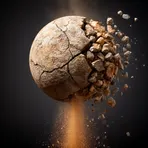
Fall apart into smaller pieces or stop working together
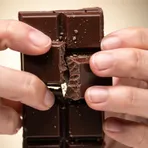 28
2.8
28
2.8
To make a piece come away from something by hitting or bending it
 26
3.0
26
3.0
To separate into pieces, for example a machine or a group
 21
3.9
21
3.9
To break into many small, sharp pieces like wood or glass
 16
4.0
16
4.0
To come apart from something it is connected to
 9
5.3
9
5.3
To begin to fail, fall apart, or lose control
 5
5.3
5
5.3
To disconnect two things that are joined, often machine parts
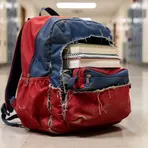 5
7.2
5
7.2
To fall apart or stop working properly after being stable
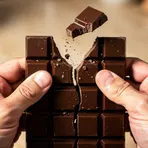 2
3.5
2
3.5
To come off a larger thing, often because of force or damage
 1
9.9
1
9.9
To cut or separate something into parts, often by breaking it
Antonyms

How Broken

Surface Forms
Morphology
The meaning 'to break into pieces or separate' is directly and transparently derived from combining 'come' (move/arrive) with 'apart' (into separate pieces). This motion/particle composition follows common phrasal-verb patterns and is cross-linguistically intuitive, so a B1 learner who knows both constituents should be able to infer the meaning.
Etymology
Come apart paints a picture: imagine a toy that comes apart, pieces falling into your hands. So, it means 'to break into pieces' or 'to separate'.