

to splinter
 21
3.9
21
3.9

- verb
- /ˈsplɪntər/
- The wagon was ruined, the canvas shredded, and the wooden box splintered and cracked.
Loading YouTube…
Watch on YouTubeThe narcissistic ego is as fragile as sponge sugar, and when it crashes, it splinters into lots of little pieces.
- The narcissistic ego is as fragile as sponge sugar, and when it crashes, it splinters into lots of little pieces.
- The energy of him pushing me back pushes him back, and then the door disintegrates as machine gun riots just trace through here and splinter this door.
- Balanced on the compass needle splintered from the center of the earth.
Examples
-
One Who Cries thrust the splintered shaft into the mad beast's eye, making the animal flinch.
Fiction book (1990) -
If you don't handle the glass carefully, it can splinter and cause injury.
-
The wood splintered like it's been ripped out of here.
-
The man jumps away from a small tree that has splintered six inches from his shoulder.
Fiction book (1992) -
Some undetectable fault would splinter and drop her through its shards.
Academic text (2007) -
His leg's not only fractured in three places, the bone is splintered.
-
Garth's staff hammered down across its skull, splintering with the force of the impact.
Fiction book (1992) -
Exceptionally powerful storms can blow a tree over, either uprooting it entirely or splintering its trunk.
Academic text (1993) -
Under its upper section gaped an irregular hole framed by boards that had splintered into sharp fragments.
Fiction book (1992) -
The old wooden chair splintered when he sat down too hard.
Synonyms
 ∞
1.0
∞
1.0
To change a large bill into smaller bills
 104
2.3
104
2.3
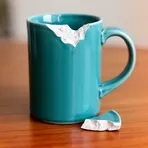
To break off a small piece of an object
 91
4.7
91
4.7
To break a hard object, for example a bone or rock
 72
2.8
72
2.8
To break suddenly into many small pieces, like glass
 66
2.7
66
2.7
Separate something into smaller pieces
 56
1.9
56
1.9
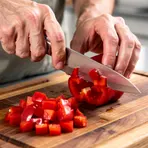
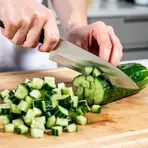
To cut something into smaller pieces by sharp blows again and again with a knife or axe
 47
2.6
47
2.6
To divide something into smaller parts
 44
3.1
44
3.1
To break into pieces or fall into separate parts
 39
3.7
39
3.7
To break into small pieces or make something break apart
 39
2.7
39
2.7
To rip something into small pieces
 32
1.1
32
1.1
Make something into smaller pieces using scissors or a knife
 28
2.8
28
2.8
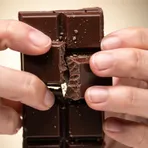
To make a piece come away from something by hitting or bending it
 26
3.0
26
3.0
To separate into pieces, for example a machine or a group
 9
3.5
9
3.5
To break a piece from something with a quick, sharp movement
 8
5.4
8
5.4
Break something into many small parts or hurt someone very badly
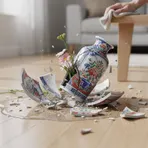 5
4.7
5
4.7
To damage something very badly so it breaks into pieces
 3
3.2
3
3.2
Break a small piece from something by hitting or pressing it
 3
5.1
3
5.1
To break or cut something into thin narrow pieces
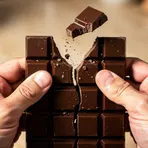 2
3.5
2
3.5
To come off a larger thing, often because of force or damage

To break something into many small pieces

To divide something into parts, for example by cutting it or by sharing it among people

To tear something into separate parts, usually by force
Compounds

How Broken

Surface Forms
Etymology
The word splinter comes from an old German word meaning 'split' and gives a strong image of wood cracking into many thin, sharp pieces. So to splinter is to 'split' something into small, sharp pieces.