

to cut to pieces
 8
5.4
8
5.4

- phrasal verb
- Surprised and caught in the open, the Germans were cut to pieces in the ensuing fight.
- get cut to pieces
Loading YouTube…
Watch on YouTubeAnd once the person's hand is bent back, they're just their whole game gets cut to pieces.
- And once the person's hand is bent back, they're just their whole game gets cut to pieces.
Examples
-
They'll cut him to pieces.
-
On this hillside, on a June day in 1876, George Armstrong Custer and more than two hundred soldiers were cut to pieces by those they had sought to slaughter.
Fiction book (1995) -
Let him land, then cut him to pieces.
-
We'll cut her to pieces.
-
They'll cut you to pieces.
-
Krueger will cut you to pieces before you can even flex a muscle.
Fiction book (1991) -
She never hurt her physically, but she could cut her to pieces with her acid tongue until, in spite of herself,
Fiction book (1997) -
The hurricane cut to pieces the trees, leaving debris scattered across the yard.
-
The critics cut to pieces his performance, pointing out all of his mistakes.
-
During the war, the enemy forces were cut to pieces by the relentless artillery fire.
Synonyms
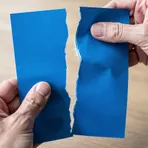 ∞
1.0
∞
1.0
To pull something so it breaks into pieces
 513
1.3
513
1.3
To break something into two or more parts
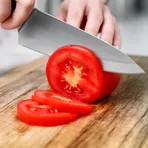 203
1.0
203
1.0
To cut something into thin flat pieces with a knife
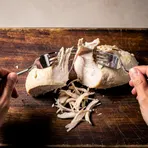 112
2.6
112
2.6
To tear something into small thin pieces
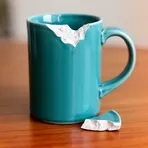 104
2.3
104
2.3
To break off a small piece of an object
 89
2.3
89
2.3
To make something into smaller pieces using a knife or tool
 72
2.8
72
2.8
To break suddenly into many small pieces, like glass
 66
2.7
66
2.7
Separate something into smaller pieces
 56
1.9
56
1.9
To cut something into smaller pieces by sharp blows again and again with a knife or axe
 47
2.6
47
2.6
To divide something into smaller parts
 39
2.7
39
2.7
To rip something into small pieces
 39
3.7
39
3.7
To break into small pieces or make something break apart
 32
1.1
32
1.1
Make something into smaller pieces using scissors or a knife
 26
3.0
26
3.0
To separate into pieces, for example a machine or a group
 21
3.9
21
3.9
To break into many small, sharp pieces like wood or glass
 10
6.9
10
6.9
Tear something into many pieces or say very bad things about it
 9
9.0
9
9.0
To divide something into parts, often breaking a company or country
 9
1.5
9
1.5
To cut something into thin slices
 8
2.8
8
2.8
To tear something into small pieces
 5
4.7
5
4.7
To damage something very badly so it breaks into pieces
 3
3.2
3
3.2
Break a small piece from something by hitting or pressing it
 3
5.1
3
5.1
To break or cut something into thin narrow pieces
 2
7.4
2
7.4
To beat someone completely in a competition or argument
 1
3.2
1
3.2
To break something into smaller parts

To break something into many small pieces

To divide something into parts, for example by cutting it or by sharing it among people
Antonyms


How Damaged

Surface Forms
Morphology
The primary sense 'to shred or break into small parts' is compositionally derived from 'cut' (slice/separate) + 'pieces' (small parts), with 'to' indicating result/extent, so a B1 learner who knows the constituents will readily infer the meaning. The figurative sense (to damage or criticize severely) is a transparent metaphorical extension of the literal image and therefore remains predictable from the parts.
Etymology
Cut to pieces comes from a simple, violent image of cut and pieces: imagine a knife slicing meat or a storm tearing a barn into many small parts. That's why it now means 'to break something into small parts' and, by that strong picture, 'to hurt someone deeply' with words or actions.