

to snap off
 9
3.5
9
3.5

- phrasal verb
- /snæp ɔf/
- In fact, he took a bite of the tomato and snapped off a piece of the crisp bean and ate it.
- the handle snapped off
- snap off the ends
- snap off a twig
Loading YouTube…
Watch on YouTubeAnd my nails got so long, like the longest I think my nails have ever been and then they all snapped off.
- And my nails got so long, like the longest I think my nails have ever been and then they all snapped off.
- The sponges are really easy to just kind of snap off, snap on.
- Knife handle snapped off and I'd done one.
Examples
-
She tried to snap off a branch from the tree but it was too thick.
-
When you need to shorten the pencil, just snap off the broken piece.
-
First, you snap off the head.
-
Consequently, they snap off easily and go blowing about.
Academic text (1998) -
If you run that fast, your ankles are gonna snap off.
-
The relay antenna must have snapped off.
-
You know, pruning shears, they can snap off a branch or a plant bulb just like that.
-
Celestine walked over to a rosebush and snapped off a dead blossom between her thumb and index finger.
Fiction book (1997) -
With a quick motion, he snapped off the plastic tip of the pen.
Synonyms
 ∞
1.0
∞
1.0
To change a large bill into smaller bills
 ∞
1.0
∞
1.0
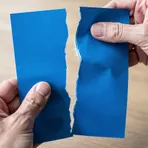
To pull something so it breaks into pieces
 167
2.3
167
2.3
Break suddenly and completely, often with a sharp noise
 127
1.9
127
1.9
To make a sudden sharp sound like something breaking
 91
4.7
91
4.7
To break a hard object, for example a bone or rock
 80
4.5
80
4.5
To pull something away quickly and roughly
 28
2.8
28
2.8
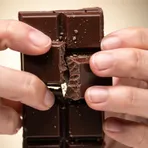
To make a piece come away from something by hitting or bending it
 16
4.0
16
4.0
To come apart from something it is connected to
 12
3.0
12
3.0
To pull something off quickly until it rips
 12
2.1
12
2.1
To remove a piece from something using the teeth
 9
4.3
9
4.3
Pull things away one at a time
 6
4.5
6
4.5
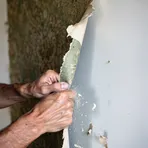
To pull something off quickly with force
 3
3.2
3
3.2
Break a small piece from something by hitting or pressing it
 2
3.5
2
3.5
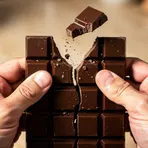
To come off a larger thing, often because of force or damage
Antonyms
How Forceful

Surface Forms
Morphology
The meaning 'to break a piece from something' is directly and compositionally derived from 'snap' (to break sharply) plus the particle 'off' indicating separation or removal. This follows a common English verb+particle pattern that is cross-linguistically transparent, so a B1 learner who knows both constituents would readily infer the meaning.
Etymology
The phrasal verb snap off comes from the quick action and sound when something breaks. Imagine bending a twig until it snaps and a small piece falls off, so it means 'to break a piece from something with a sudden movement'.