

to tear away
 6
4.5
6
4.5

- phrasal verb
- /tɛr əˈweɪ/
- Patrick, in a fury to live, tears away the boards and debris blocking the exit.
Loading YouTube…
Watch on YouTubeSo they go and they start tearing away the coverings of the scarecrow and what is found.
- So they go and they start tearing away the coverings of the scarecrow and what is found.
- Climate change is being used, I believe, as a mirage to tear people's rights away.
Examples
-
The chair's seat had been torn away from the frame on one side when it hit the floor.
Blog text (2) -
Chuck tears away the bamboo, picks up the nest of kindling, and blows on it gently.
Fiction book (2000) -
But I have torn it away.
Academic text (2018) -
Maybe the wind had torn the paper away?
Fiction book (2001) -
The metal cowling at the top of one building had been torn away.
Fiction book (2000) -
"Take a look," Colin Friendly instructed, his free arm reaching across the bed to tear the blanket away from my sleeping husband.
Fiction book (1997) -
In the heat of the moment, he had to tear away the fabric to save her from the fire.
-
The strong wind began to tear away the loose shingles from the roof during the storm.
-
Feeling overwhelmed, she had to tear away the paperwork that was cluttering her desk.
Synonyms
 ∞
1.0
∞
1.0
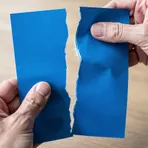
To move something toward you using force, often to remove it
 ∞
1.0
∞
1.0
To pull something so it breaks into pieces
 523
2.7
523
2.7
To take something out of a place, often with effort
 196
4.1
196
4.1
To pull something suddenly and hard
 82
5.3
82
5.3
To stop being part of or connected to something
 80
4.5
80
4.5
To pull something away quickly and roughly
 77
3.5
77
3.5
To pull something out quickly with the fingers
 68
4.4
68
4.4
To pull something out quickly and with force, often to remove it completely
 50
3.0
50
3.0
To separate something into parts so it can be moved or fixed
 41
2.7
41
2.7
To take something off from where it is attached
 28
2.8
28
2.8
To make a piece come away from something by hitting or bending it
 26
3.0
26
3.0
To separate into pieces, for example a machine or a group
 24
4.8
24
4.8
To pull something out with force
 21
3.2
21
3.2
To break something into pieces by hand
 16
4.0
16
4.0
To come apart from something it is connected to
 15
6.1
15
6.1
To force something or someone out of a place where they are stuck
 12
3.0
12
3.0
To pull something off quickly until it rips
 10
8.7
10
8.7
To pull something apart with great force
 9
4.3
9
4.3
Pull things away one at a time
 9
3.7
9
3.7
To remove clothes or a cover completely and quickly
 9
3.5
9
3.5
To break a piece from something with a quick, sharp movement
 9
4.6
9
4.6
To cut a part from something with one quick move
 8
3.9
8
3.9
Move someone or something quickly to another place
 7
3.7
7
3.7
To pull something away from where it is, for example a bandage or curtain
 5
3.4
5
3.4
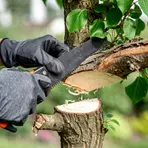
To remove a part from something with a knife or tool
 4
8.7
4
8.7
To force something away from someone after a struggle
 2
3.5
2
3.5
To come off a larger thing, often because of force or damage
 1
6.1
1
6.1
To separate something from what it is connected to
Antonyms
How Forceful

Surface Forms
Morphology
The meaning 'to remove or detach by pulling' is directly and predictably built from 'tear' (to pull or rend apart) plus 'away' (movement to another location), so the overall sense is compositional rather than idiomatic. This verb+particle pattern is common in English (and has parallels in many languages), so a B1 learner who knows both constituents would very likely infer the MWE's meaning.
Etymology
The phrasal verb tear away paints a simple picture: imagine using tear to rip and pull something away from its place, like peeling off old wallpaper or wind that tears away roof tiles. So, it means 'to remove something by pulling or ripping it off with force'.