

to come away
 2
3.0
2
3.0

- phrasal verb
- /kʌm əˈweɪ/
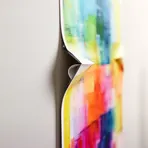
- The age-stained paper was blistered where the paste had come away from the plaster.
- hand came away
- finger came away
- came away wet
Examples
-
I thought I had mashed banana all over it, but when I touched it, my fingers came away red.
Fiction book (1997) -
He wiped his mouth with his hand and came away with crushed flecks of dead skin.
Fiction book (1993) -
His hand came away wet with blood.
Fiction book (1993) -
His fingers come away sticky.
Fiction book (1997) -
Blood came away on his fingertips.
Fiction book (1993) -
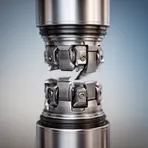
If I remove these springs, the whole front header pipe section comes away pretty easily.
Blog text (14) -
No matter how gently I lift the veil, your face comes away with it.
Fiction book (1997) -
But annoyingly it's come away from the board here, so that connector needs to go on.
-
I'm looking at this what I presume is a resistor, and it looks like the covering has come away from it completely.
-
The wallpaper started to peel, and parts of it came away from the wall.
Synonyms
 481
2.9
481
2.9
To move apart or stop being together
 161
3.5
161
3.5
To separate something so it is no longer joined, for example remove a cable or turn off power
 131
3.5
131
3.5
To become loose and fall off
 117
2.3
117
2.3
Separate from something by breaking or dropping
 86
3.5
86
3.5
To move away from people or a place to create space
 82
5.3
82
5.3
To stop being part of or connected to something
 16
4.0
16
4.0
To come apart from something it is connected to
 5
3.6
5
3.6
To escape suddenly from control, capture, or a group
 1
6.2
1
6.2
To free someone or something from limits so they can act more freely
 1
6.1
1
6.1
To separate something from what it is connected to

 1
5.8
1
5.8
To become loose and move away from a surface

Let something that was connected become separate
Antonyms

How Detached

Surface Forms
Morphology
The meaning is related to the literal constituents: 'come' + 'away' signals moving away or leaving, and in contexts like 'came away feeling…' this motion is extended to a resultant state after an experience. However, the shift from physical movement to a resultant emotional or evaluative state is a metaphorical extension that is not fully predictable from the parts, so a B1 learner may only partially infer the precise meaning without prior exposure.
Etymology
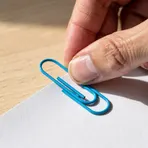
Come away shows a very simple picture: something 'comes' and moves 'away' from a surface, like paint or a sticker lifting when you pull it. So it means 'to become detached' or 'to come off'.