

to come off
 131
3.5
131
3.5

- phrasal verb
- /kʌm ɔf/
- Even the light breeze coming off the river intensified the chill.
- come off easily
- bandages come off
- wheels come off
Loading YouTube…
Watch on YouTubeAnd this I can feel the strap starting to come off my my body.
- And this I can feel the strap starting to come off my my body.
Examples
-
I opened the flap of the compartment, and it came off in my hand.
Fiction book (1992) -
And all of this excess fill in will come off too, once it's dry.
-
This product here, I think it came off slightly easier.
-
I had to do that thing and the handle came off.
-
His whole arm might have come off.
-
I think that just came off... the camera just almost came off the mount.
-
And once the shoes come off, the socks are quick to follow.
-
Plenty of rest and in a few days the bandage will come off and she'll be up and running.
-
Oh, my rearview mirror came off, that's it.
-
When I tried to pull the sticker off, it came off easily without leaving any residue.
Synonyms
 481
2.9
481
2.9
To move apart or stop being together
 161
3.5
161
3.5
To separate something so it is no longer joined, for example remove a cable or turn off power
 117
2.3
117
2.3
Separate from something by breaking or dropping
 82
5.3
82
5.3
To stop being part of or connected to something
 39
5.6
39
5.6
To become detached and carried away by a strong force
 28
2.8
28
2.8
To make a piece come away from something by hitting or bending it
 16
4.0
16
4.0
To come apart from something it is connected to
 15
6.1
15
6.1
To force something or someone out of a place where they are stuck
 12
3.0
12
3.0
To pull something off quickly until it rips
 9
3.5
9
3.5
To break a piece from something with a quick, sharp movement
 5
5.3
5
5.3
To disconnect two things that are joined, often machine parts
 4
6.7
4
6.7
Disconnect parts that were joined so they work independently
 2
3.0
2
3.0
To become loose and separate from something
 2
3.5
2
3.5
To come off a larger thing, often because of force or damage
 1
6.1
1
6.1
To separate something from what it is connected to


 1
5.8
1
5.8
To become loose and move away from a surface
Antonyms

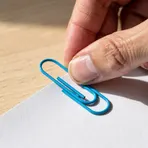
How Attached

Surface Forms
Morphology
Although the literal meanings of 'come' (move/arrive) and 'off' (away/from) give a loose metaphorical basis that could suggest something 'coming into being' or 'coming away' — allowing a learner to guess a meaning like 'happen' — the specific sense 'to happen or take place (especially successfully/as planned)' is an extended, partly idiomatic use of the particle. The relation is therefore only partly predictable from the parts and requires some exposure, so it is best classified as semi-transparent.
Etymology
Come off: The phrasal verb come off shows something moving away from what holds it, like a button or a label that comes off a shirt when it becomes loose. That's why it means 'to become detached'.