
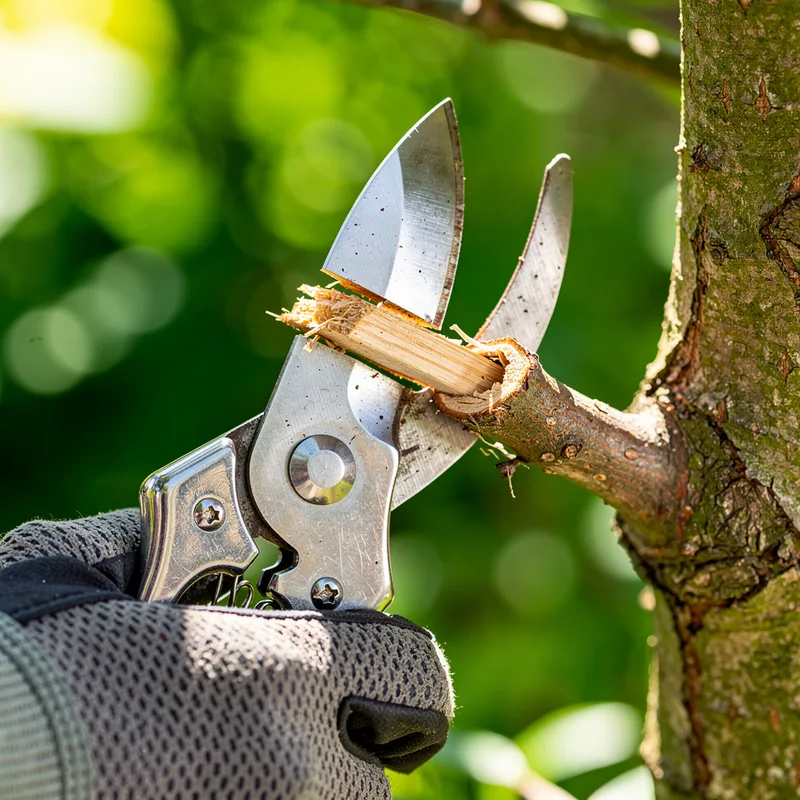
to cut off
 190
4.1
190
4.1

- phrasal verb
- /kʌt ɔf/
- NSFW
- The gardener needed to cut off the dead branches to encourage new growth.
- cut off the head
- cut off a finger
- cut off a hand
Loading YouTube…
Watch on YouTubeSo I made them both ways and then we just cut off whatever we don't need.
- So I made them both ways and then we just cut off whatever we don't need.
- So I come in down here and cut off this section.
- If your arm got cut off, would you pray for your arm to grow back?
- How do we know that John doesn't want to cut off Amy's skin and wear it like a suit?
Examples
-
So we're going to cut off those corners, both sides.
-
You could simply cut off the excess canvas and leave it.
-
So just cut like this, cut off the end.
-
And then we cut off one side.
-
So just cut the top off, really simply cut off the bottom.
-
And then that portion that they cut off they let fall.
-
No surprise Fox cut off part of his left wing.
-
Apparently, he even wanted to cut off the finger on which I wore a ring.
Academic text (2010) -
But yeah, sometimes you have to cut off the parts that don't look good.
-
So I made them both ways and then we just cut off whatever we don't need.
Synonyms
 ∞
1.5
∞
1.5
To remove clothes or something from your body
 161
3.5
161
3.5
To separate something so it is no longer joined, for example remove a cable or turn off power
 100
5.6
100
5.6
To cut something completely away from a larger thing with a knife or tool
 48
7.2
48
7.2
To cut off a limb or body part by surgery
 45
3.4
45
3.4
To remove something by cutting, often with a sharp blow
 41
2.7
41
2.7
To take something off from where it is attached
 28
2.8
28
2.8
To make a piece come away from something by hitting or bending it
 12
3.0
12
3.0
To pull something off quickly until it rips
 9
4.3
9
4.3
Pull things away one at a time
 9
3.7
9
3.7
To remove clothes or a cover completely and quickly
 9
4.6
9
4.6
To cut a part from something with one quick move
 9
3.5
9
3.5
To break a piece from something with a quick, sharp movement
 5
3.4
5
3.4
To remove a part from something with a knife or tool
 3
3.2
3
3.2
Break a small piece from something by hitting or pressing it
 2
3.7
2
3.7
To cut a small part off something quickly and neatly with scissors or shears


 1
8.3
1
8.3
To cut off the top of a tree or branch

Cut off small parts by pinching or snipping
Antonyms

How Severed

Surface Forms
Morphology
The sense 'to stop, interrupt, or block suddenly' can be partially inferred from 'cut' (to sever/remove) plus 'off' (indicating removal or cessation), so a learner who knows both words will likely grasp the general idea of severing continuity. However, the phrasal-verb senses are somewhat metaphorical and vary by context (interrupting speech, cutting a supply, being disconnected), so the exact interpretation and range of uses typically require prior exposure.
Etymology
Cut off The verb cut off comes from the simple act of using a knife or saw to cut something off, for example trimming hair or a doctor removing a badly injured toe. So, it means 'to remove or detach something by cutting'.