

to take off
 ∞
1.5
∞
1.5

- phrasal verb
- /teɪk ɔf/
- Before going to bed, I always take off my shoes to feel more comfortable.
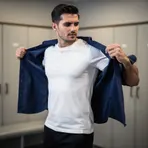
- take off clothes
- take off your hat
- take off your shoes
Loading YouTube…
Watch on YouTubeYou know, you could take off that mask and show up.
- You know, you could take off that mask and show up.
- So it appears to have taken off all of my makeup.
- All right, so let's take off the foam cover.
- And we can take them off of our platform.
- Just just take off one of your socks, OK?
- It's like, well, I didn't take my boot off, but huh.
- Yes, when I take my glasses off, I can't read the prompter.
- He goes, the guy takes his shirt off and he doesn't mention it.
Examples
-
I'm going to go ahead and take this mask off the face.
-
Let me just take my glasses off here and say this.
-
No, all it does is take off my foundation.
-
In the room, I take off my shoes and lie down on the bed.
Academic text (2007) -
I thought nothing of just taking off all my clothes and going into bed.
Academic text (1990) -
You know, you could take off that mask and show up.
-
I'm going to take them off, OK.
-
All right, so let's take off the foam cover.
-
Also going to take her sheet off because it's laundry day.
-
Then Pat Morris' husband sits down on the sand and takes off his shoes.
Fiction book (1990)
Synonyms
 ∞
1.5
∞
1.5
To move something or someone away from a place
 88
2.0
88
2.0
To take off clothes from yourself or another person
 63
3.4
63
3.4
Take off most or all clothes
 46
3.0
46
3.0
To remove something that is fixed or standing, for example stage equipment
 41
2.7
41
2.7
To take something off from where it is attached
 39
7.7
39
7.7
Take off some or all clothes in a noticeable way
 27
4.0
27
4.0
Remove an outside layer or covering from something to show what is under it
 16
3.9
16
3.9
To take something off from what it is connected to
 12
6.3
12
6.3
To take off your clothes
 12
3.0
12
3.0
To pull something off quickly until it rips
 12
5.1
12
5.1
To take off most or all of your clothes
 11
2.8
11
2.8
To take off quickly and easily, especially clothes or small items
 9
3.7
9
3.7
To remove clothes or a cover completely and quickly
 8
3.4
8
3.4
To take off the outer layer by pulling it
 3
4.8
3
4.8
To get rid of something you do not want or need
 3
7.3
3
7.3
Remove clothes from the body


 1
3.8
1
3.8
To quickly remove something you have or that bothers you

To remove clothes from a person or a cover from an object

To take off or get rid of something quickly and without care
Antonyms
How Undressed

Surface Forms
Morphology
take + off
The sense 'to become successful or popular' is a metaphorical extension of the literal 'take' + 'off' idea of departing or launching (as with a plane or a product), so there is a recognizable link to the constituent meanings. However, this extended, idiomatic sense is not fully predictable from the parts for an average B1 learner without prior exposure, making the expression only partially transparent.
Etymology
Take off comes from the clear image of removing an item of clothing or an object. You take a jacket off by pulling it away, so the phrase means 'to remove' something.