
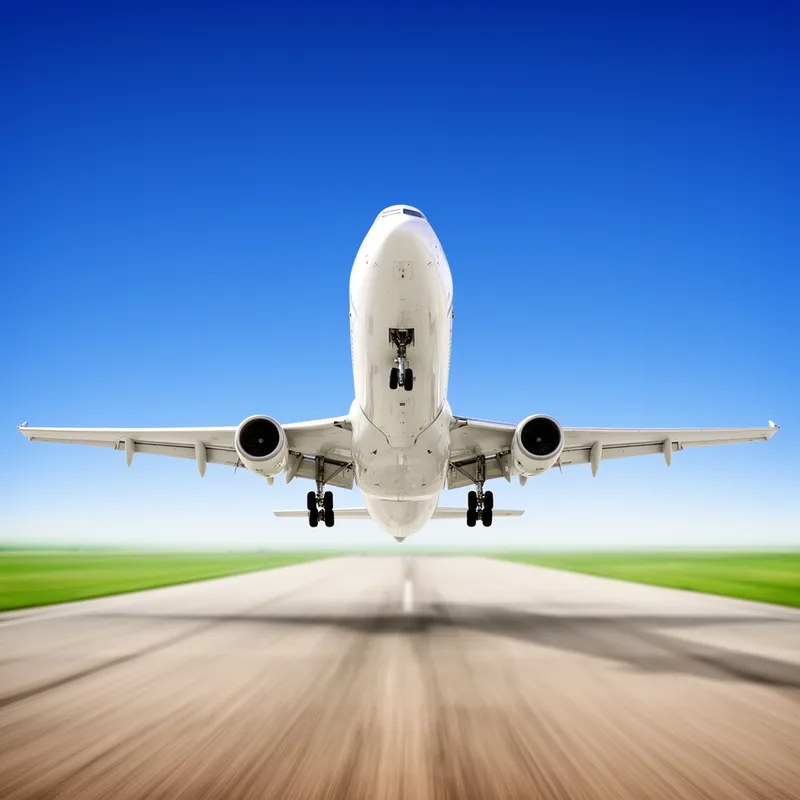
to take off
 478
1.9
478
1.9

- phrasal verb
- /teɪk ɔf/
- So eventually the plane took off and I landed.
- a plane takes off
- take off and land
Loading YouTube…
Watch on YouTubeIf that plane had taken off, would would what he said have happened?
- If that plane had taken off, would would what he said have happened?
- And then at his signal I let go and the plane took off and went around and around.
- This is where some of those, those birds that took off at that point come to roost, right?
Examples
-
The airplane will take off from the runway at 10 AM tomorrow.
-
And then at his signal I let go and the plane took off and went around and around.
-
I tried to follow her, but she took off.
-
And it just took off into the sky.
-
We take off for home tomorrow.
-
On Friday morning, my flight with El Al was to take off at 8 a.m.
Academic text (2015) -
Both shuttles will take off Tuesday at 6:30 PM.
-
After the plane took off and rose to approximately 15,000 feet, oxygen saturation decreased to 85%.
Academic text (2007) -
After a brief wait, the rocket is finally set to take off into space.
-
As the sun rose, the bird prepared to take off and soar into the sky.
Synonyms
 20
3.9
20
3.9
To rise into the air from the ground like a plane or rocket
 11
3.5
11
3.5
Leave quickly to escape danger, often by flying
 10
4.1
10
4.1
To send a rocket up into the sky or space
 4
4.6
4
4.6
To begin flying and rise into the sky
 3
5.8
3
5.8
Begin to fly, like birds rising into the air or projects starting to do well
Antonyms
How Airborne

Surface Forms
Morphology
take + off
The sense 'to become successful or popular' is a metaphorical extension of the literal 'take' + 'off' idea of departing or launching (as with a plane or a product), so there is a recognizable link to the constituent meanings. However, this extended, idiomatic sense is not fully predictable from the parts for an average B1 learner without prior exposure, making the expression only partially transparent.
Etymology
Take off for planes and birds comes from the picture of leaving the ground and rising into the air. A plane takes itself off the ground and goes up, so the phrase means 'to begin to fly'.