

to lift off
 20
3.9
20
3.9

- phrasal verb
- /lɪft ɔf/
- Coren could feel it lift off the ground and then pick up speed.
- lifted off by helicopter
Examples
-
On January 28, 1986, the space shuttle Challenger lifted off from Cape Canaveral.
-
We will be ready for lift off in approximately three hours.
-
The methods are different, but the important thing is that tomorrow morning, man will lift off toward the moon.
-
We have lift off on Apollo 11.
-
The doors close and the helicopter lifts off, rising high above the cluster of white coats below.
Fiction book (1995) -
Flight 175 carrying 65 souls on board, lifts off from the Boston runway.
-
Wanda gets on the med-evac chopper; it lifts off, leaving a furious Eve and a confused Jamie behind.
Fiction book (1997) -
The rocket will lift off shortly after the countdown reaches zero.
-
The airplane lifted off smoothly as the pilot increased the throttle.
Synonyms
 478
1.9
478
1.9
To leave the ground and begin to fly
 38
4.2
38
4.2
Start a project or business successfully so it begins to work
 12
4.2
12
4.2
To send something quickly up using a powerful engine
 10
4.1
10
4.1
To send a rocket up into the sky or space
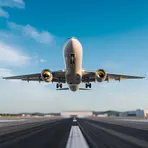 4
4.6
4
4.6
To begin flying and rise into the sky
Antonyms


How Fast

Surface Forms
Morphology
The meaning 'to rise into the air' is directly derivable from combining 'lift' (to raise upward) with 'off' (away from a surface), following a common English motion verb + particle pattern that signals separation or departure. A B1 learner who knows both constituents would readily infer this sense; the construction is compositional and cross-linguistically common, so it is transparent.
Etymology
Lift off is a phrase from watching rockets, planes, or drones push away from the ground. The engines lift the vehicle and it comes off the ground, so the phrase means 'to rise into the air'.