

cut off
 23
4.4
23
4.4

- adjective
- ZHANG: This ecosystem is completely cut off from the rest of the ocean by the freezing cold thermocline.
Examples
-
Below our knees, everything had been cut off from our vision.
Fiction book (2002) -
Her t-shirt's sleeves have been cut off and neckline cut low.
Fiction book (2000) -
Completely cut off from the outside world.
-
We are completely cut off.
-
You are, as of this moment, completely financially cut off.
-
He's been on a hunting trip and cut off from the world.
Fiction book (1995) -
South Korean scholars now found themselves cut off from access to the stela itself.
Academic text (2002) -
Then, as today, high tide reached the foot of the cliffs, occasionally cutting off careless fossil seekers.
Academic text (1995) -
After the storm, the town was cut off from the main road due to fallen trees.
-
The remote village is often cut off from modern conveniences and technology.
Synonyms
 25
3.4
25
3.4
A shape removed from paper or cloth with scissors
 8
6.0
8
6.0
Cut shorter by sawing, often a gun or pipe
 1
5.8
1
5.8
Cut off from the rest by a sharp object
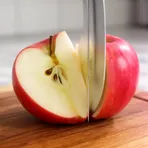
Made by opening or dividing with something sharp

Shortened because a part is cut away or time is limited

An object like a gun or stick made shorter by cutting off part
How Detached

Surface Forms
Morphology
The sense 'to stop, interrupt, or block suddenly' can be partially inferred from 'cut' (to sever/remove) plus 'off' (indicating removal or cessation), so a learner who knows both words will likely grasp the general idea of severing continuity. However, the phrasal-verb senses are somewhat metaphorical and vary by context (interrupting speech, cutting a supply, being disconnected), so the exact interpretation and range of uses typically require prior exposure.
Etymology
Cut off The adjective cut off describes something left separate after being cut off, like a branch lying apart from a tree or a sleeve with a jagged edge where the fabric was removed. So, it means 'detached or removed by cutting'.