

cut out
 25
3.4
25
3.4

- adjective
- /kʌt aʊt/
- She admired the intricate cut out design on the cake that revealed multiple layers inside.
- a cut-out figure
Loading YouTube…
Watch on YouTubeAnd I've got my shapes pre cut out to size.
- And I've got my shapes pre cut out to size.
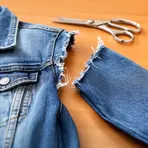
- It's like a smock dress with cut out shoulders and tiny little side sleeves.
Examples
-
Option number one is just a cut out in the side of the case.
-
This is a steel cut out of my face.
-
The whole scene had been cut out of construction paper.
Fiction book (1993) -
So this is actually a cut out of the earth interior.
-
- Little metal identification tab has been cut out.
-
It's a massive, massive cardboard cut out of our kids head.
-
It looks like I can see a cut out in a copper plate too.
-
Others near them carried huge, circular slabs of stone with the centers cut out.
Fiction book (1992) -
An entire wall is covered with a collage of cut-out pictures from magazines.
Fiction book (1993) -
Hand-drawn symbols, cut-out pictures, and other material are used to mark key events along the journey.
Academic text (2005)
Synonyms
 23
4.4
23
4.4
Separated by cutting from a larger thing
 2
2.8
2
2.8
Shaped in a particular way by removing parts with a blade
 1
5.8
1
5.8
Cut off from the rest by a sharp object
How Big

Surface Forms
Morphology
The adjective 'cut out' is directly and transparently composed from 'cut' (to remove by cutting) + 'out' (indicating removal/separation), so it denotes something removed or formed by cutting from a larger surface. This compositional pattern (e.g., 'cut-out design') is common in English and cross-linguistically intuitive, so a B1 learner who knows the constituents should readily infer the meaning.
Etymology
Cut out as an adjective for a shape comes from the fact the piece was literally cut out from a larger surface, like a paper snowflake, so it describes a piece that is 'removed or formed by cutting'.