

to cut out
 77
3.2
77
3.2

- phrasal verb
- /kʌt aʊt/
- Magda tried to entertain the child by cutting out pictures from a magazine and showing them to Ryan.
- cut out pictures
- cut out a portion
- cut out the tongue
Loading YouTube…
Watch on YouTubeAnd now we are going to cut out our little pumpkins.
- And now we are going to cut out our little pumpkins.
- Her cancer had been cut out, but dementia had set in.
- Please cut out negative and inject positive.
- And all I did was cut out some of the high carb foods in my diet.
- For example, I can cut out a large angle.
Examples
-
Next, take your green felt and cut out tiny leaves.
-
Next, take your green felt and cut out tiny leaves for your craft project.
-
Now I want to cut out some big circles.
-
You can also cut out your shapes.
-
Now I had my work cut out for me, preparing for my journey.
Academic text (2001) -
Those two sheets of paper were cut out from a single sheet.
-
Remains of the page drifted to the floor as I carefully cut out the obituary.
Fiction book (2000) -
Editing allows you to add music, cut out errors or unwanted segments, and tighten up the program.
Academic text (2007) -
Using a pattern and a knife, cut out the bunny's body and ears from the cake.
-
I think you need to do some editing, like maybe cut out all that stuff about your childhood.
Synonyms
 ∞
2.3
∞
2.3
To remove parts or make something shorter, for example text
 948
1.9
948
1.9
To remove something from a place or container
 100
5.6
100
5.6
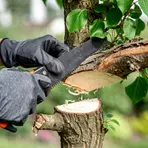
To cut something completely away from a larger thing with a knife or tool
 68
4.4
68
4.4
To pull something out quickly and with force, often to remove it completely
 45
3.4
45
3.4
To remove something by cutting, often with a sharp blow
 24
4.8
24
4.8
To pull something out with force
 23
4.4
23
4.4
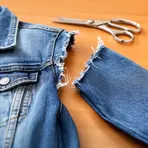
Separated by cutting from a larger thing
 14
7.2
14
7.2
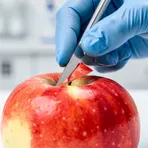
To cut out part of a body or text
 14
2.3
14
2.3
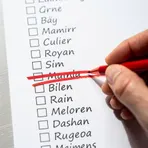
Draw a line through a word or item to show it should be removed
 11
3.2
11
3.2
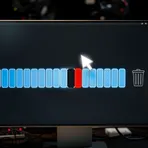
Remove part of a film, recording, or text before release
 9
4.6
9
4.6
To cut a part from something with one quick move
 8
3.7
8
3.7
Remove a name or item from a list by drawing a line through it
 5
3.4
5
3.4
To remove a part from something with a knife or tool
 4
4.0
4
4.0
Draw lines through writing so you cannot read it
 2
3.7
2
3.7
To cut a small part off something quickly and neatly with scissors or shears

Cut a piece of wood or stone into a shape with a tool like an axe
Antonyms


How Much

Surface Forms
Morphology
The adjective 'cut out' is directly and transparently composed from 'cut' (to remove by cutting) + 'out' (indicating removal/separation), so it denotes something removed or formed by cutting from a larger surface. This compositional pattern (e.g., 'cut-out design') is common in English and cross-linguistically intuitive, so a B1 learner who knows the constituents should readily infer the meaning.
Etymology
Cut out meaning to remove something by cutting comes from the act of cutting a shape from a larger piece of paper or cloth; you literally cut the shape out of the sheet. That's why it means 'to remove or form something by cutting'.