

radical
 1
7.2
1
7.2

- noun
- /ˈrædɪkəl/
- Specialized
- "Radical" means literally "of the root," and is appropriate name-calling/labeling for those pursuing major structural changes regarding any given agenda (whether or not one approves of what's advocated).
Examples
-
So that all other elements were called bases or radicals, right?
-
Silinsky wrote the book "Rules for Radicals."
Blog text (9) -
What Ruyn describes is found in the foreword of Saul Alinsky's Rules for Radicals.
Blog text (24) -
The concept "radical" points to a continuity of development "from the roots" while indicating exponential improvements, whereas "disruptive" points towards a qualitative and quantitative leap that "disrupts" the existing laws of the human condition through new technologies.
Academic text (2017) -
In linguistics, the radical of a word is what remains when all affixes are removed.
-
To understand the meaning of complex words, we often look at their radical forms.
-
The teacher explained that the radical is essential for understanding how words are constructed.
Synonyms
 24
4.8
24
4.8
The basic form of a word from which other words are made
 4
7.0
4
7.0
The main part of a word that other parts are added to
 3
6.7
3
6.7
The main part of a word before prefixes or endings are added
 2
7.4
2
7.4
The base form of a word after removing added beginnings and endings


 1
4.2
1
4.2
The basic form of a word after removing beginnings and endings
Compounds

- Specialized
8
5.1
A small unstable atom or molecule that can damage body cells by reacting with them

- Specialized
3
6.1
Surgery that removes a breast, chest muscles, and lymph nodes under the armpit to treat breast cancer

- Specialized
1
7.2
Surgery that removes the womb, ovaries, fallopian tubes, cervix, and nearby lymph nodes to treat cancer

- Specialized
1
6.8
A surgery that removes a breast with nearby chest muscle and some armpit lymph nodes


- Specialized
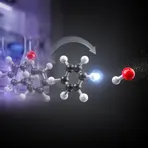
A small chemical group formed when toluene loses one hydrogen atom from its methyl part


- Specialized
A small chemical group made of one carbon and one nitrogen atom written as -CN

- Specialized
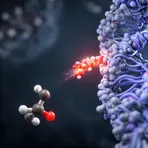
A small chemical group made of one carbon and one nitrogen atom that attaches to other molecules, written as −CN
- Specialized
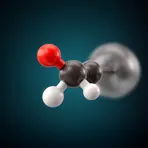
A small group of atoms from acetic acid that can attach to other molecules

- Specialized
A carbon atom double-bonded to oxygen and single-bonded to hydrogen
- Specialized
A group of carbon and hydrogen atoms that attaches to a molecule with one free bond
- Specialized
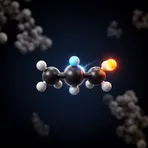
A small, reactive part of a molecule with three carbon atoms and one unpaired electron

- Specialized
A chemical group with two nitrogen atoms that links two carbon chains and gives bright colours to dyes
- Specialized
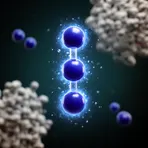
A small chemical group made of three nitrogen atoms that carries a negative charge
- Specialized
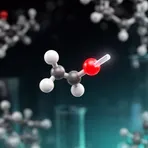
A part of a molecule used in chemistry, formed from the acid in vinegar, written CH3CO

- Specialized
A small reactive group of two carbon and five hydrogen atoms that forms when ethane loses one hydrogen atom

- Specialized
A very reactive group of one carbon and two hydrogen atoms that exists briefly in chemical reactions

- Specialized
A very active group of one carbon and three hydrogen atoms with formula CH3, formed when methane loses one hydrogen

- Specialized
A small chemical part made of one oxygen and one hydrogen atom that reacts quickly
- Specialized
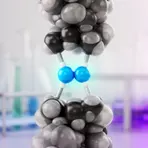
A small chemical group made of two nitrogen atoms and hydrogen that can attach to a molecule at two places
- Specialized
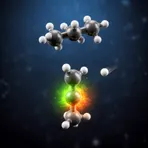
A small reactive part of a molecule made from propane when it loses one hydrogen



- Specialized
A charged particle made of uranium and oxygen that forms salts with acids
- Specialized
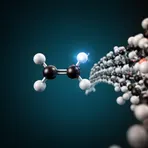
A small chemical group with formula CH2=CH− that reacts easily in making plastics
Surface Forms
Morphology
radical = radic + al
This linguistic sense essentially means 'root' (the basic form after removing affixes), so its meaning corresponds directly to the base concept even though the combining form 'radic' is not a standalone English word.
Etymology
Radical comes from the Latin radix, meaning 'root'. In language study, the radical is the basic 'root' form of a word before you add prefixes or endings.