
radical
 1
8.5
1
8.5

- noun
- /ˈrædɪkəl/
- Specialized
 :
radical
:
radical
- Using the radical formula, we determined the length of the diagonal of the square.
And now, just like before, take just the radical out the radical and plug in your substitution and see how it simplifies.
- And now, just like before, take just the radical out the radical and plug in your substitution and see how it simplifies.
Examples
-
To solve the equation, find the radical of the expression under the square root.
-
The low-level radiation can induce the formation of free radicals in our bodies, which in turn can cause cancer.
Blog text (26) -
Then, you find the radical, see what page it starts on, then jump to that page in the dictionary.
Blog text (3) -
Well, remember, we can always rewrite radicals as rational powers.
-
In mathematics, the radical sign represents the square root of a number.
Synonyms
 34
8.2
34
8.2
A number that solves an equation
Compounds

- Specialized
8
5.1
A small unstable atom or molecule that can damage body cells by reacting with them

- Specialized
3
6.1
Surgery that removes a breast, chest muscles, and lymph nodes under the armpit to treat breast cancer

- Specialized
1
7.2
Surgery that removes the womb, ovaries, fallopian tubes, cervix, and nearby lymph nodes to treat cancer

- Specialized

 1
6.8
1
6.8
A surgery that removes a breast with nearby chest muscle and some armpit lymph nodes


- Specialized
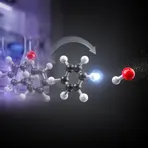
A small chemical group formed when toluene loses one hydrogen atom from its methyl part

- Specialized
A small chemical group made of one carbon and one nitrogen atom written as -CN

- Specialized
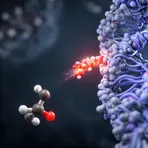
A small chemical group made of one carbon and one nitrogen atom that attaches to other molecules, written as −CN
- Specialized
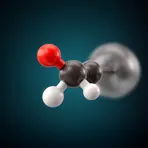
A small group of atoms from acetic acid that can attach to other molecules

- Specialized
A carbon atom double-bonded to oxygen and single-bonded to hydrogen
- Specialized
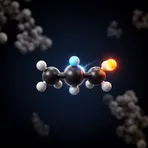
A group of carbon and hydrogen atoms that attaches to a molecule with one free bond
- Specialized
A small, reactive part of a molecule with three carbon atoms and one unpaired electron
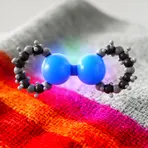
- Specialized
A chemical group with two nitrogen atoms that links two carbon chains and gives bright colours to dyes
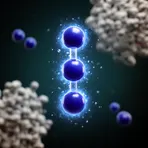
- Specialized
A small chemical group made of three nitrogen atoms that carries a negative charge
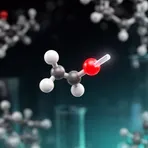
- Specialized
A part of a molecule used in chemistry, formed from the acid in vinegar, written CH3CO
- Specialized
A small reactive group of two carbon and five hydrogen atoms that forms when ethane loses one hydrogen atom

- Specialized
A very reactive group of one carbon and two hydrogen atoms that exists briefly in chemical reactions

- Specialized
A very active group of one carbon and three hydrogen atoms with formula CH3, formed when methane loses one hydrogen

- Specialized
A small chemical part made of one oxygen and one hydrogen atom that reacts quickly
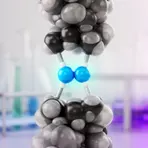
- Specialized
A small chemical group made of two nitrogen atoms and hydrogen that can attach to a molecule at two places
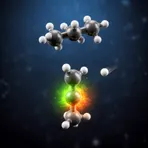
- Specialized
A small reactive part of a molecule made from propane when it loses one hydrogen


- Specialized
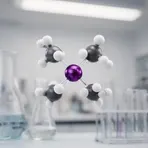
A charged particle made of uranium and oxygen that forms salts with acids
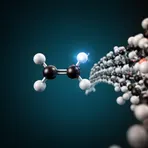
- Specialized
A small chemical group with formula CH2=CH− that reacts easily in making plastics
Surface Forms
Morphology
radical = radic + al
The mathematical sense ('root' under √) is directly related to the 'root' concept but is a technical usage and not transparently analysable from the surface form for average learners.
Etymology
Radical comes from the Latin radix, meaning 'root'. In math, a radical points to a 'root' (as with the √ sign), so the name shows we are finding a number's root.