

ethanoyl radical
- noun
- /ˈiːθəˌnɔɪl ˈrædɪkəl/
- Specialized
- A common example of an acyl group in chemistry is the ethanoyl radical.
Examples
-
The reaction produced an intermediate known as the ethanoyl radical, which is essential for further synthesis.
-
The ethanoyl radical is a key component in many important biochemical reactions.
-
Researchers studied the reactivity of the ethanoyl radical in various organic syntheses.
-
An ethanoyl radical is important in organic chemistry.
-
The ethanoyl radical is crucial in organic chemistry.
-
In many biochemical pathways, the formation of the ethanoyl radical plays a pivotal role.
-
Chemists often use the ethanoyl radical to explore new methods in organic synthesis.
Synonyms

 1
9.3
1
9.3

A small chemical group made from acetic acid that attaches to other molecules
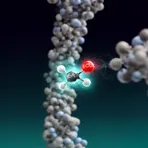
A small part of a molecule with formula CH3CO that changes how the molecule reacts, also called an acetyl group

A small chemical part with atoms CH3CO that attaches to other molecules
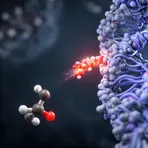
A small group of atoms from acetic acid that can attach to other molecules
Surface Forms
Morphology
ethanoyl + radical
The head 'radical' is a transparent chemical term (a reactive species), but 'ethanoyl' is a technical, morphologically bound chemical morpheme (ethan‑ + ‑oyl) that B1 learners will not generally know or decompose. If a learner did know both specialized constituents they could compose the meaning (a radical of the ethanoyl/acyl group), but because one constituent is highly technical and not transparently analyzable by general learners the expression is only partially predictable.
Etymology
Ethanoyl radical comes from ethanoyl, formed from the word 'ethane' meaning 'two carbons' plus the ending 'oyl' for a part taken from an acid, and from radical, an old word for a 'small active piece' of a molecule. So it means the small CH3CO- part that comes from acetic acid, like vinegar, and can attach to other molecules.