

radical
 1
9.9
1
9.9

- noun
- /ˈrædɪkəl/
- Specialized
- In many kanji, the radical helps to categorize the meaning, such as the radical for tree, which suggests something related to nature.
- the same radical
Examples
-
Every Chinese character starts with a radical, a simple character squished into a more complex one.
Blog text (20) -
Most kanji dictionaries will list all the radicals somewhere and order them by stroke order.
Blog text (3) -
- It should be the radical for water.
-
This is the radical for wood.
-
But how do you know what the radical is for a kanji?
Blog text (3) -
The more you look up, the easier it will be to identify radicals.
Blog text (3) -
The first character, "thin," shares the same radical as "ill," "disease," "sore," and "ache."
Blog text (20) -
Jisho uses the official radicals plus a few extra.
Blog text (3) -
When it comes to paper kanji dictionaries, you only get one shot at choosing the correct radical.
Blog text (3) -
The radical for fire is commonly depicted as a flame in Chinese characters.
Compounds

- Specialized
8
5.1
A small unstable atom or molecule that can damage body cells by reacting with them

- Specialized
3
6.1
Surgery that removes a breast, chest muscles, and lymph nodes under the armpit to treat breast cancer

- Specialized
1
7.2
Surgery that removes the womb, ovaries, fallopian tubes, cervix, and nearby lymph nodes to treat cancer

- Specialized

 1
6.8
1
6.8
A surgery that removes a breast with nearby chest muscle and some armpit lymph nodes

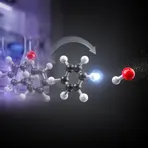

- Specialized
A small chemical group formed when toluene loses one hydrogen atom from its methyl part
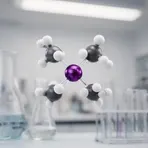

- Specialized
A small chemical group made of one carbon and one nitrogen atom written as -CN

- Specialized
A small chemical group made of one carbon and one nitrogen atom that attaches to other molecules, written as −CN
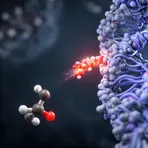
- Specialized
A small group of atoms from acetic acid that can attach to other molecules

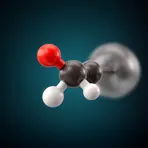
- Specialized
A carbon atom double-bonded to oxygen and single-bonded to hydrogen
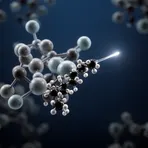
- Specialized
A group of carbon and hydrogen atoms that attaches to a molecule with one free bond
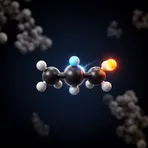
- Specialized
A small, reactive part of a molecule with three carbon atoms and one unpaired electron
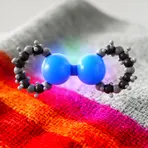
- Specialized
A chemical group with two nitrogen atoms that links two carbon chains and gives bright colours to dyes
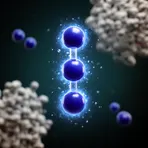
- Specialized
A small chemical group made of three nitrogen atoms that carries a negative charge
- Specialized
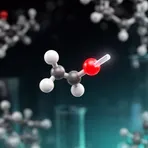
A part of a molecule used in chemistry, formed from the acid in vinegar, written CH3CO
- Specialized
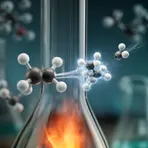
A small reactive group of two carbon and five hydrogen atoms that forms when ethane loses one hydrogen atom

- Specialized
A very reactive group of one carbon and two hydrogen atoms that exists briefly in chemical reactions

- Specialized
A very active group of one carbon and three hydrogen atoms with formula CH3, formed when methane loses one hydrogen

- Specialized
A small chemical part made of one oxygen and one hydrogen atom that reacts quickly
- Specialized
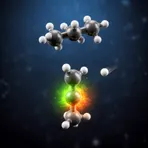
A small chemical group made of two nitrogen atoms and hydrogen that can attach to a molecule at two places
- Specialized
A small reactive part of a molecule made from propane when it loses one hydrogen


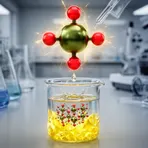
- Specialized
A charged particle made of uranium and oxygen that forms salts with acids
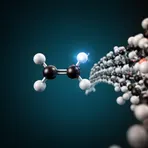
- Specialized
A small chemical group with formula CH2=CH− that reacts easily in making plastics
Surface Forms
Etymology
Radical comes from the Latin radix, meaning 'root'. In Chinese and Japanese writing, a radical is the part of a character that gives its basic meaning, like the character's 'root'.