
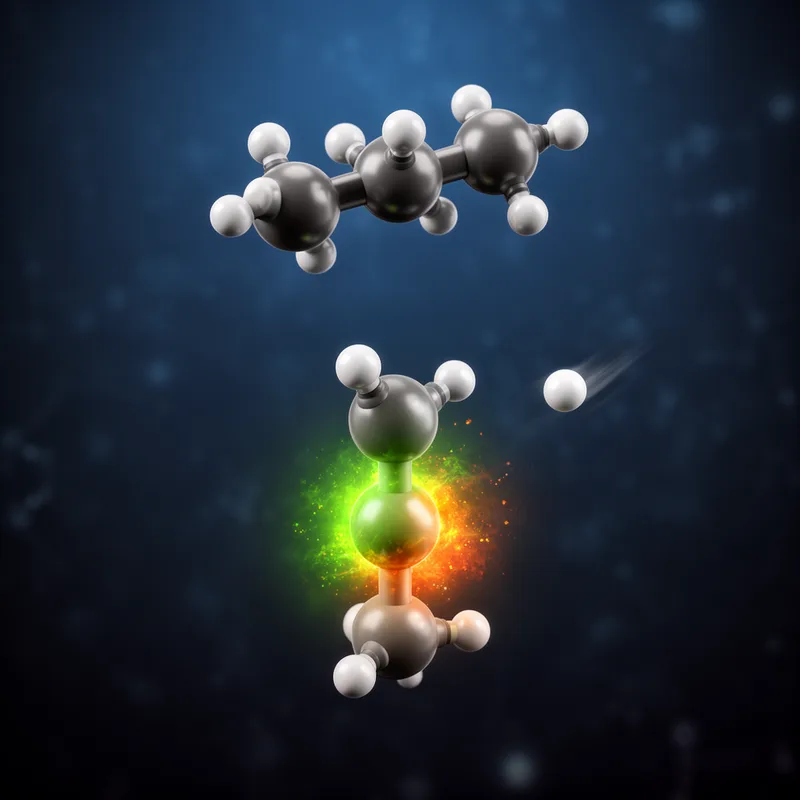
propyl radical
- noun
- /ˈproʊpəl ˈrædɪkəl/
- Specialized
- When propane loses a hydrogen atom, a propyl radical is formed.
Examples
-
The propyl radical is often encountered as a substituent in organic synthesis reactions.
-
Scientists compared the reactivity of the propyl radical and the methyl radical in the experiment.
-
The propyl radical is often used in organic chemistry.
-
Can you explain what a propyl radical is?
-
The propyl radical is a crucial intermediate in the production of various organic compounds.
-
Chemists use the propyl radical to study reactions in organic chemistry.
-
After breaking down propane, they observed the formation of a propyl radical.
Synonyms
A small group of three carbon atoms and seven hydrogen atoms attached to another molecule
A small part of a molecule made of three carbon atoms and seven hydrogen atoms that attaches to others
Surface Forms
Morphology
The term is directly compositional: 'propyl' specifies the C3H7 hydrocarbon group and 'radical' denotes a reactive species with an unpaired electron, so 'propyl radical' straightforwardly denotes the radical derived from a propyl group. Although both words are technical chemistry vocabulary (and may be unfamiliar to a typical B1 learner), their combination follows regular chemical naming and is predictable for anyone who knows the constituent meanings.
Etymology
Propyl radical comes from propyl, a part made from 'propane', and radical, a word chemists use for a very active fragment formed when one hydrogen atom is lost. So the term means a reactive group made from propane that can quickly join to other atoms.

