
aldehyde radical
- noun
- /ˈældaɪhaɪd ˈrædɪkəl/
- Specialized
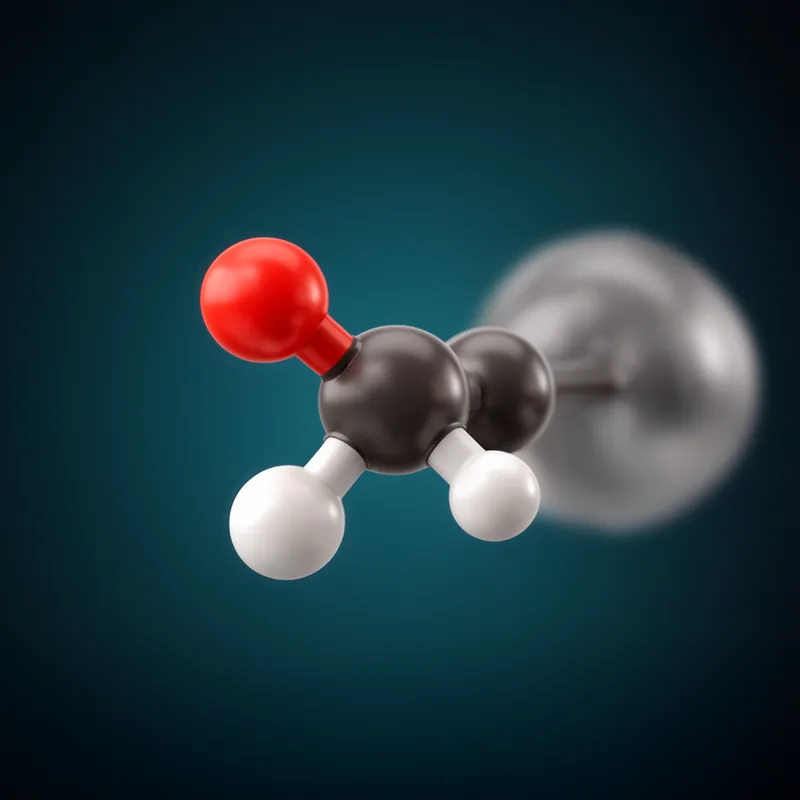
- In the structure of formaldehyde, there is a single aldehyde radical bonded to a hydrogen atom.
Examples
-
The presence of an aldehyde radical distinguishes aldehydes from other organic compounds.
-
Chemists often test for the aldehyde radical to identify aldehydes in a sample.
-
The aldehyde radical is crucial in organic chemistry.
-
Many reactions involve the formation of an aldehyde radical.
-
Chemists often test for the aldehyde radical to identify aldehydes in a sample.
-
The presence of an aldehyde radical distinguishes aldehydes from other organic compounds.
-
In the structure of formaldehyde, there is a single aldehyde radical bonded to a hydrogen atom.
Synonyms

A chemical group in a molecule with a carbon bonded to hydrogen and double-bonded to oxygen
Surface Forms
Morphology
The phrase is compositionally transparent in that 'aldehyde' qualifies the kind of 'radical', so a learner who knows both words can infer it refers to a radical species related to aldehydes (for example the formyl radical). However, this is domain-specific chemical terminology and the precise technical sense (functional group naming versus a reactive radical species) may not be fully predictable without specialist knowledge, so the transparency is partial.
Etymology
The term aldehyde radical names the small 'root' part of a molecule written as -CHO, the group of atoms that gives an aldehyde its character. So, it means the specific group of atoms that tells chemists a compound is an aldehyde.

