

radical
 462
6.0
462
6.0

- adjective
- /ˈrædɪkəl/
- The government is now positioned to implement the kind of radical reforms contained in the reanimation package.
- a radical change
- a radical movement
- a radical shift
Loading YouTube…
Watch on YouTubeAnd I see a lot of radical Trail Blazers.
- And I see a lot of radical Trail Blazers.
- I think it's really radical and cool work.
- It's because you could say radical selflessness, right?
- And you can look at, you know, radical regimes like that.
- And what happens instead is a tradition of radical rupture emerges.
- There's not really anything that radical about it honestly.
- Revolutions are changes, radical changes in things.
- There are, you know, the radical Islam is not Islam.
- Yep, but that means radical acceptance up to the sky.
Examples
-
For this and myriad other reasons, such a radical retelling certainly warrants scrutiny.
Academic text (2017) -
They represent some of the most radical views in Congress.
-
I think it's really radical and cool work.
-
That was a pretty radical thing to say.
-
-This is a radical plan.
-
It's too radical for them!
-
You made a much more radical transition in that way.
-
You gotta admit doc, it's a pretty radical theory.
-
I refuse to listen to such radical talk.
-
The committee proposed a radical change to the education system that would benefit all students.
Synonyms
 103
5.2
103
5.2
Causing a big change in how people do things
 65
6.9
65
6.9
Having very strong political or religious views that most people reject
Antonyms


Compounds

- Specialized
8
5.1
A small unstable atom or molecule that can damage body cells by reacting with them

- Specialized
3
6.1
Surgery that removes a breast, chest muscles, and lymph nodes under the armpit to treat breast cancer

- Specialized
1
7.2
Surgery that removes the womb, ovaries, fallopian tubes, cervix, and nearby lymph nodes to treat cancer

- Specialized

 1
6.8
1
6.8
A surgery that removes a breast with nearby chest muscle and some armpit lymph nodes


- Specialized
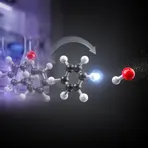
A small chemical group formed when toluene loses one hydrogen atom from its methyl part

- Specialized
A small chemical group made of one carbon and one nitrogen atom written as -CN

- Specialized
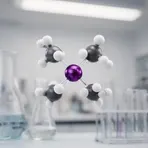
A small chemical group made of one carbon and one nitrogen atom that attaches to other molecules, written as −CN
- Specialized
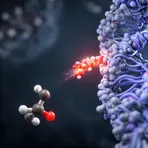
A small group of atoms from acetic acid that can attach to other molecules

- Specialized
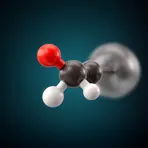
A carbon atom double-bonded to oxygen and single-bonded to hydrogen
- Specialized
A group of carbon and hydrogen atoms that attaches to a molecule with one free bond
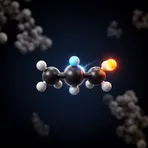
- Specialized
A small, reactive part of a molecule with three carbon atoms and one unpaired electron

- Specialized
A chemical group with two nitrogen atoms that links two carbon chains and gives bright colours to dyes
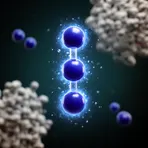
- Specialized
A small chemical group made of three nitrogen atoms that carries a negative charge
- Specialized
A part of a molecule used in chemistry, formed from the acid in vinegar, written CH3CO
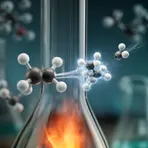
- Specialized
A small reactive group of two carbon and five hydrogen atoms that forms when ethane loses one hydrogen atom

- Specialized
A very reactive group of one carbon and two hydrogen atoms that exists briefly in chemical reactions

- Specialized
A very active group of one carbon and three hydrogen atoms with formula CH3, formed when methane loses one hydrogen

- Specialized
A small chemical part made of one oxygen and one hydrogen atom that reacts quickly
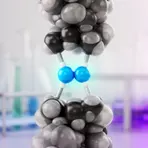
- Specialized
A small chemical group made of two nitrogen atoms and hydrogen that can attach to a molecule at two places
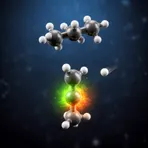
- Specialized
A small reactive part of a molecule made from propane when it loses one hydrogen


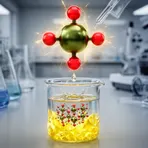
- Specialized
A charged particle made of uranium and oxygen that forms salts with acids
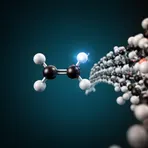
- Specialized
A small chemical group with formula CH2=CH− that reacts easily in making plastics
How Radical
877
3.6
 103
5.2
462
6.0
6
6.1
85
4.6
306
4.4
103
5.2
462
6.0
6
6.1
85
4.6
306
4.4
Surface Forms
Morphology
radical = radic + al
The modern sense 'extreme'/'fundamental' is a metaphorical extension that an average B1 learner cannot derive from the unseen combining form 'radic' + '-al'.
Etymology
Radical comes from the Latin radix, meaning 'root'. So a radical change is one that goes to the 'root' of a problem, making it very new or very different.