

to wear away
 2
3.8
2
3.8

- phrasal verb
- /wɛr əˈweɪ/
- What is carved on rock will wear away in time.
Loading YouTube…
Watch on YouTubeAnd then that can wear away due to water flowing underground.
- And then that can wear away due to water flowing underground.
- Rough stone balls, a very hard stone which dropped repeatedly, wear away the stone to do the major quarrying.
- And what sometimes happens is the little hook here can wear away.
- OK, Now we have a problem to solve because we wore away part of the die.
- The very fact that I like it and keep on wearing it is precisely what makes it wear away.
Examples
-
All the grass has been worn away from their hooves.
Fiction book (1999) -
And as you sputter, you slowly wear away layers of this material.
-
But I really like the way these wear because the shine can wear away, but you still have some pretty color.
-
Once again, a drop of water has worn away the stone!
Academic text (1998) -
At that time, the brownstones had begun to wear away.
Fiction book (1998) -
However, the driving sandstorms must have worn away any prominent surface features millions of years ago.
Fiction book (1999) -
As a result, tissue repair is ineffective, and once damaged, cartilage keeps wearing away, eventually to the bone.
Academic text (2002) -
Over a long time, the rough wind slowly wears away these rocks.
-
After millions of years, wind and rain can wear away the upper layers.
-
When the cartilage begins to wear away, the bones rub against each other.
Synonyms
 470
3.3
470
3.3
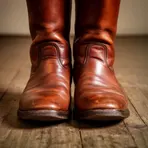
Last without much damage after long use
 83
4.2
83
4.2
Gradually make someone's trust, belief, or support weaker over time
 27
4.1
27
4.1
Slowly make a person or thing weaker by repeated pressure
 27
4.0
27
4.0
Remove an outside layer or covering from something to show what is under it
 26
2.3
26
2.3
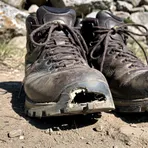
To get damaged or stop working after long use
 24
4.2
24
4.2
To make something smaller or weaker by removing small parts slowly
 18
4.6
18
4.6
Gradually make something weaker by repeated small actions
 17
4.1
17
4.1
Slowly damages metal, rock and someone's confidence by chemicals or steady pressure
 5
3.4
5
3.4
Come off a surface when something moves against it
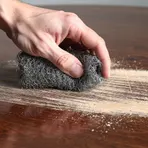 5
8.1
5
8.1
The surface wears away when something rubs or scrapes it
 1
3.4
1
3.4
Remove a mark by moving a cloth or hand over it many times
 1
4.7
1
4.7
To remove the top layer of something by rubbing it with sandpaper
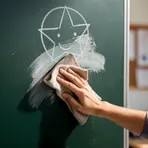 1
4.3
1
4.3
Erase a mark by using an eraser or cloth until it disappears

Wear away the surface of something by rubbing or scraping

To wear away a surface slowly by rubbing
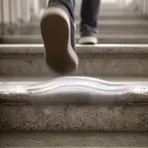
To wear a surface down by rubbing

To rub something so it becomes damaged at the edges
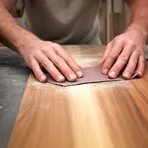
To make a surface smooth by moving something over it
Antonyms
How Eroded

Surface Forms
Morphology
The meaning 'to gradually reduce or remove by continuous use or exposure' is directly derivable from combining 'wear' (to suffer loss or damage from use) with 'away' (indicating removal or disappearance). This verb + particle composition follows a common, cross-linguistic pattern and would be predictable to a B1 learner who knows both constituents.
Etymology
The phrasal verb wear away paints a clear picture: imagine many feet rubbing a stone step until it becomes thin and smooth. The constant rubbing, the wear, slowly takes the stone away, so today the phrase means 'to gradually remove or damage something'.