

to rub away
 1
3.4
1
3.4

- phrasal verb
- /rʌb əˈweɪ/
 :
frotar
:
frotar
- Dinah was finding that she had to rub the sand away with her thumb, and even so, she could still feel a persistent gritty residue.
- tries to rub away
So we actually start by rubbing away the outside plastic here.
- So we actually start by rubbing away the outside plastic here.
Examples
-
And I'll put some of my beauty counter instant eye makeup remover on there just a little bit and rub away gently.
-
Sea-cold sweat stood out all over his body, and he clutched at himself, trying to rub the terror away.
Fiction book (1992) -
So we actually start by rubbing away the outside plastic here.
-
So I feel like it can rub away the eyeshadow below if you rub it around too much.
-
With the truth of his situation like a cold lump in his stomach, he sat up and tried to rub away the chill in his bones and the crick in his neck.
Fiction book (1995) -
"Grandma Saddiya takes a wet towel to my face, rubbing away the specks of paint."
Fiction book (1997) -
He rubbed his hands slowly on the length of his thigh as if to rub away a stain.
Fiction book (1991) -
Silwa rubbed away the light sheen of sweat on his forehead and tugged at his black beard.
Fiction book (1991) -
She used a cloth to rub away the dirt on the table until it sparkled.
-
After the rain, he had to rub away the water spots on the car's windshield.
Synonyms
 62
1.2
62
1.2
To rub material off a surface with something hard or sharp
 28
2.0
28
2.0
To remove something from a surface by moving a cloth over it, like tears or dirt
 27
4.0
27
4.0
Remove an outside layer or covering from something to show what is under it
 20
1.0
20
1.0
Remove dirt or marks from a surface by rubbing with a cloth
 5
3.4
5
3.4
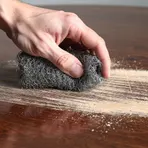
Come off a surface when something moves against it
 5
8.1
5
8.1
The surface wears away when something rubs or scrapes it
 4
4.0
4
4.0
Draw lines through writing so you cannot read it
 3
5.2
3
5.2
To rub a surface with a small rough tool to remove something
 2
3.8
2
3.8
To slowly remove material by rubbing or long use
 1
2.5
1
2.5
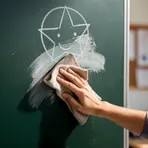
To remove dirt or stains by rubbing hard with a brush
 1
4.3
1
4.3
Erase a mark by using an eraser or cloth until it disappears
 1
4.7
1
4.7
To remove the top layer of something by rubbing it with sandpaper


 1
1.0
1
1.0
To remove dirt or mud from a surface

Remove marks or stains from a surface so it looks clean
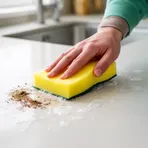
To rub a surface with a wet sponge to clean it
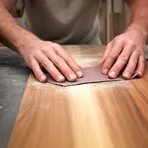
To make a surface smooth by moving something over it

Wear away the surface of something by rubbing or scraping

To wear away a surface slowly by rubbing

To rub something so it becomes damaged at the edges

To remove dust or crumbs quickly with a light movement
Antonyms

How Thorough

Surface Forms
Morphology
The meaning 'to remove by rubbing repeatedly' is directly derivable from 'rub' (apply pressure with repeated motion) + 'away' (to remove or disappear); the particle 'away' transparently signals removal. This V + away composition is a common, productive pattern in English (compare 'wipe away', 'brush away') and would be understandable to a B1 learner who knows the constituents.
Etymology
Rub away comes from the simple image of rubbing a mark or stain again and again until it disappears. When you use rub to move dirt so it goes away, the thing is removed, so the phrase means 'to remove something by rubbing'.