
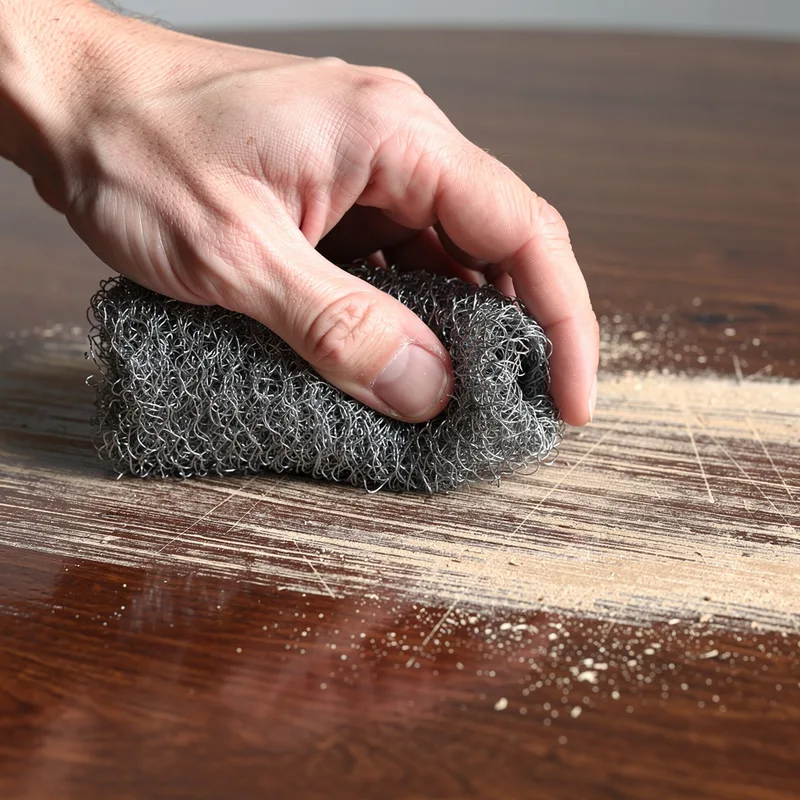
to abrade
 5
8.1
5
8.1

- verb
- /əˈbreɪd/
- Using a fine grit sandpaper will help abrade the wood before applying the finish.
- abraded ear
Examples
-
The marble beaches are unsatisfactory when viewed solely as protection because the sediments are too easily abraded to provide long-term protection.
Academic text (2008) -
Exoskeletal parts of the Alien are abraded and ripped off by the moving piston.
Fiction book (1992) -
I can see my remarks have begun to abrade the skin.
Fiction book (1994) -
I could see the wire leader abrading the front of his head.
Academic text (1997) -
The heel of a wine bottle had abraded into foggy green stone.
Fiction book (1997) -
A thin bandage was taped over his abraded palm.
Fiction book (1992) -
The parent material is first lightly abraded (blasted) to create a "tooth" for the coating.
Blog text (20) -
The rough surface of the stone can abrade the skin if you rub against it.
-
If you scrub too hard, you might abrade the painted surface of the wall.
Synonyms
 62
1.2
62
1.2
To rub material off a surface with something hard or sharp
 5
3.4
5
3.4
Come off a surface when something moves against it
 2
3.8
2
3.8
To slowly remove material by rubbing or long use
 2
6.1
2
6.1
Wear a surface away slowly by rubbing, or make someone very tired
 1
6.7
1
6.7
Wear away skin or material by rubbing
 1
3.4
1
3.4
Remove a mark by moving a cloth or hand over it many times
 1
4.7
1
4.7
To remove the top layer of something by rubbing it with sandpaper


 1
9.9
1
9.9
Remove material from a surface by melting, wearing away, or burning

Wear away the surface of something by rubbing or scraping

To wear away a surface slowly by rubbing
To make a surface smooth by moving something over it

To rub something so it becomes damaged at the edges

To wear away rock when water or wind rubs it
Antonyms

How Abrasive

Surface Forms
Etymology
Abrade comes from the Latin parts ab- 'away' and radere 'to scrape', so it meant 'to scrape away'. Think of sandpaper or a razor slowly removing the top layer of something, and that's why to abrade is to wear or rub a surface away.