

to sponge off
- phrasal verb
- She sponged off the table until it was perfectly clean.
Examples
-
The janitor sponged off the whiteboard before the next class arrived.
-
Please sponge off the table before dinner!
-
After dinner, he sponged off the kitchen counter.
-
He always sponge off the kitchen counters after cooking.
-
Before serving dinner, she always makes sure to sponge off the table to remove any crumbs.
-
After the kids finished painting, I had to sponge off the splatters on the floor.
-
He used a damp cloth to sponge off the stains from the kitchen counter.
Synonyms
 531
1.0
531
1.0

To clean and dry a surface by rubbing it with a cloth or your hand
 83
1.0
83
1.0
To wash something with water to remove soap or dirt
 37
1.0
37
1.0
To clean a floor with a long handle and wet cloth
 31
1.0
31
1.0
To remove something from a surface by washing with water or soap
 28
2.0
28
2.0
To remove something from a surface by moving a cloth over it, like tears or dirt
 20
1.0
20
1.0
Remove dirt or marks from a surface by rubbing with a cloth
 10
1.6
10
1.6
To wash something with water to remove soap or dirt
 8
1.8
8
1.8
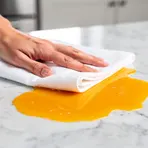
To clean a surface using a cloth or towel to remove a spill
 5
2.6
5
2.6
To remove liquid or dirt from a floor with a cloth
 4
2.1
4
2.1
To clean up liquid by using a soft thing that soaks it up
 1
3.3
1
3.3
To absorb liquid using a sponge, cloth, or piece of bread
 1
2.5
1
2.5
To remove dirt or stains by rubbing hard with a brush
 1
3.4
1
3.4
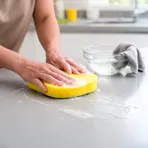
Remove a mark by moving a cloth or hand over it many times

 1
3.7
1
3.7
Clean a person or surface by rubbing with a wet cloth
 1
1.0
1
1.0
To remove dirt or mud from a surface

To remove liquid from a surface by wiping it with a cloth

To remove dust or crumbs quickly with a light movement

To clean dust and dirt from something using quick movements
How Clean

Surface Forms
Morphology
The meaning 'to clean a surface by rubbing it with a sponge' is directly and compositionally derived from 'sponge' (to clean or absorb with a sponge) plus the particle 'off' (indicating removal or wiping away). This verb+particle construction is a common, predictable English pattern and would be readily inferable by a B1 learner who knows both constituents.
Etymology
Sponge off comes from the simple image of using a wet sponge to rub dirt off a surface until it looks clean. So, it means 'to clean a surface by rubbing it with a sponge and water'.