

to sop up
 1
3.3
1
3.3

- phrasal verb
- /sɑp ʌp/
- I sopped it up on hot buttered crumbly biscuits and washed it down with cool sweet milk.
- sop up the sauce
- sop up the gravy
- sop up the juice
Loading YouTube…
Watch on YouTubeOh, and that cloth wrapping is for sopping up drool.
- Oh, and that cloth wrapping is for sopping up drool.
Examples
-
He quickly grabbed a sponge to sop up the spilled juice on the kitchen floor.
-
Near the end, they sopped up the sauce with their bread.
Fiction book (1995) -
"Is anything the matter?" Ashley asked, sopping up tomato sauce from her plate with a piece of garlic toast.
Fiction book (1999) -
You can then use the crusty bread to sop up all the creaminess.
Blog text (34) -
They are very useful to sop up gravy or butter at the dinner table.
Blog text (18) -
He had a rag nearby and sopped up the mess quickly, then carefully picked up the cup and handed it to me.
Fiction book (1997) -
Mom grabbed a paper towel and sopped up the spilled coffee leaking toward the Baby Jesuses.
Fiction book (2002) -
There he was one morning, twelve years old, sopping up redeye gravy with biscuits when his father, opposite, put down a greased chin toward a belly he couldn't button his shirt over.
Fiction book (1995) -
After dinner, she used a piece of bread to sop up the delicious sauce left on her plate.
-
The child laughed as he sopped up the puddle in the backyard with an old towel.
Synonyms
 37
1.0
37
1.0
To clean a floor with a long handle and wet cloth
 35
3.0
35
3.0
Pull in and hold a liquid or gas
 22
4.3
22
4.3
To take in liquid or information
 13
2.6
13
2.6
To take in liquid completely like a sponge or cloth
 8
1.8
8
1.8
To clean a surface using a cloth or towel to remove a spill
 7
3.2
7
3.2
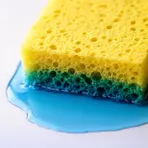
To soak up liquid or learn and keep new information
 7
3.6
7
3.6
To take in and hold something, like a sponge taking water
 5
2.6
5
2.6
To remove liquid or dirt from a floor with a cloth
 4
4.1
4
4.1
To remove liquid by pressing a soft cloth or paper against a surface
 4
2.1
4
2.1
To clean up liquid by using a soft thing that soaks it up


 1
3.7
1
3.7
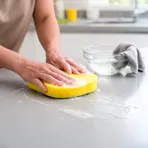
To take liquid from a surface using something like a cloth
 1
3.7
1
3.7
Clean a person or surface by rubbing with a wet cloth

To remove liquid from a surface by wiping it with a cloth
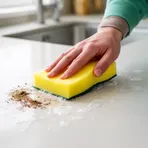
To rub a surface with a wet sponge to clean it
How Thorough

Surface Forms
Morphology
sop + up
The verb 'sop' denotes soaking/absorbing and the particle 'up' adds a completive/directional sense, so 'sop up' meaning 'to absorb liquid' is directly and compositionally derivable from the parts. This verb+particle pattern is common in English (and has clear parallels in many languages), so an average B1 learner who knows the constituents will understand the basic literal sense; figurative extensions (e.g. absorbing information) are metaphorical but follow transparently from the literal meaning.
Etymology
Sop up comes from using a piece of bread called a sop to soak up sauce; you press the sop into the liquid and the bread soaks the liquid 'up'. That's why sop up means 'to absorb or remove' a liquid.