

to soak up
 13
2.6
13
2.6

- phrasal verb
- /soʊk ʌp/
- And then I just dip the bread in and let it soak up the whole egg.
Loading YouTube…
Watch on YouTubeSo they have more smaller fat cells that can soak up more of this stuff.
- So they have more smaller fat cells that can soak up more of this stuff.
- I'm going to use some cotton wool buds to soak up the fuel and keep it in our dish.
- So glucose arrives more slowly in the bloodstream and muscles soak it up as it gets there.
Examples
-
If it weren't for all these trees and plants to soak up the water, we might have been flooded.
Fiction book (1998) -
So when it rains, this cactus wants to soak up the moisture and store it.
-
So I have to have newspaper on the floor of my car to soak up the water as it comes in.
-
Since there was nonstop rain, we had to find a way to soak up the water.
Blog text (22) -
Also, there is something in this that soaks up every ounce of moisture on your face.
-
Bryan was rubbing a piece of bread around his plate to soak up some of the sauce that was left there.
Fiction book (1999) -
It can soak up 200 times its weight in liquid, even messy grease!
-
The upper portion of her uniform, normally tan, darkened like a sponge that had soaked up red wine.
Fiction book (1997) -
With his free hand, he patted his T-shirt to soak up the perspiration.
Fiction book (1993) -
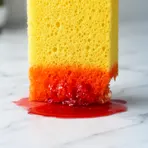
The sponge can easily soak up all the spilled juice from the table.
Synonyms
 217
3.0
217
3.0
To take in things such as liquid, light, or information
 143
4.8
143
4.8
To completely cover or hide something so it disappears
 22
4.3
22
4.3
To take in liquid or information
 8
1.8
8
1.8
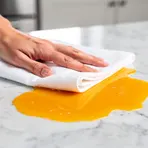
To clean a surface using a cloth or towel to remove a spill
 7
3.2
7
3.2
To soak up liquid or learn and keep new information
 5
2.6
5
2.6
To remove liquid or dirt from a floor with a cloth
 4
4.1
4
4.1
To remove liquid by pressing a soft cloth or paper against a surface
 4
2.1
4
2.1
To clean up liquid by using a soft thing that soaks it up
 1
3.3
1
3.3
To absorb liquid using a sponge, cloth, or piece of bread


 1
3.7
1
3.7
To take liquid from a surface using something like a cloth

To remove liquid from a surface by wiping it with a cloth
Antonyms

How Absorbing

Surface Forms
Morphology
The verb 'soak' has a literal sense of absorbing liquid and 'up' adds a sense of completeness, and these senses map metaphorically onto absorbing information or atmosphere. Because the meaning is a figurative extension of the literal constituents rather than a direct composition, a B1 learner who knows the words may partly infer the sense but not fully predict all uses without prior exposure.
Etymology
The verb soak up comes from the image of a sponge or cloth taking liquid in: soak means to get wet and up shows it takes the liquid completely. Imagine pressing a sponge on a spill so the water disappears into it, so it means 'to absorb liquid completely'.