

to take in
 35
3.0
35
3.0

- phrasal verb
- /teɪk ɪn/
- As the sponge takes in water, it swells and becomes soft.
- plants take in water
Loading YouTube…
Watch on YouTubeTapping as we inhale allows us to take in just a little bit more air.
- Tapping as we inhale allows us to take in just a little bit more air.
- Jet engines, On the contrary, take in and push out air.
- And so they're ingested and they're they're, they're being taken in through the skin.
- Lungs have to do with taking in life.
- that blocks that those pockets from taking in anything
- It the carbons that you take in, they have to go somewhere, right?
Examples
-
The boat tipped to its side, taking in a lot of water.
Fiction book (1991) -
Your eyes only take in color, your ears only take in sound.
-
Relax, take in the sun, breathe deeply.
-
For a minute, she stood there, taking in the sight of his back as he worked.
Fiction book (1993) -
The task of brains is to take information in and yield control.
-
A dog's nose is unbelievably sensitive, capable of taking in a wide variety of smells.
Academic text (2017) -
"Perennials also continue to take in water and nitrates later in the fall."
Academic text (2002) -
How do we intelligently go about taking in our daily microbial intake?
-
The plant needs sunlight to take in energy for photosynthesis.
-
To thrive, the trees must take in carbon dioxide from the air.
Synonyms
 217
3.0
217
3.0
To take in things such as liquid, light, or information
 68
3.6
68
3.6
To eat or drink something so it goes into your body
 7
3.2
7
3.2
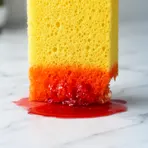
To soak up liquid or learn and keep new information
 7
3.6
7
3.6
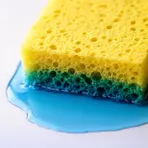
To take in and hold something, like a sponge taking water
 1
3.3
1
3.3
To absorb liquid using a sponge, cloth, or piece of bread
 1
7.5
1
7.5
Absorb energy or gases into a liquid
Antonyms

How Absorbent

Surface Forms
Morphology
The phrasal verb 'take in' here uses take (to receive/bring) + in (into/within) to mean 'absorb or experience' — as in 'take in the sights' = 'see/absorb the attractions'. The connection is metaphorical and relies on particle-verb usage that is not fully compositional or universally predictable for B1 learners, so the expression is only partially transparent.
Etymology
Take in (absorb) is like a sponge that pulls liquid in — the object draws things inside itself. That literal image explains why it means 'to absorb or draw in' a substance.