
to take in
 25
4.9
25
4.9

- phrasal verb
- /teɪk ɪn/
- Informal
- But, ya take in $50.
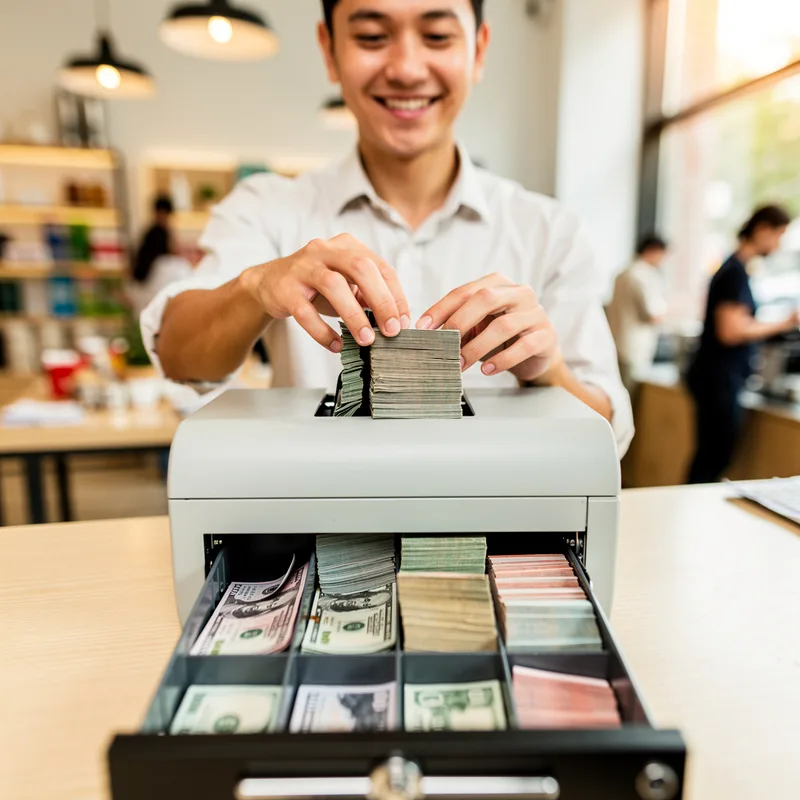
- takes in money
- takes in revenue
- company takes in
Loading YouTube…
Watch on YouTubeThey tended to be less successful like as seen by like the critical success, how long the plays run, how like how much money they took in.
- They tended to be less successful like as seen by like the critical success, how long the plays run, how like how much money they took in.
- To me, this is potentially free money that we can take in such a way that if the money gets forgiven, we get it.
Examples
-
For the two weeks since you started we've taken in four thousand nine hundred and fifty dollars over average business.
-
Instead of spending billions to "combat" pot use, we could take in billions in revenue.
Blog text (1) -
How much did we take in today?
-
Each year, the American health care industry takes in considerably more than we spend on national defense.
Blog text (12) -
Tomorrow alone we'll take in over $70,000.
-
We took in 1.18 million.
-
Shel, do you know what kind of cash we'll take in between the gate and concessions?
Fiction book (2002) -
The Marlins will have a history of making profits and will take in revenue-sharing money.
Blog text (29) -
That's part of the Arabella advisors, which as a total empire in 2020, took in $1.7 billion.
-
The local restaurant takes in a lot of money during the summer tourist season.
Synonyms
 ∞
1.0
∞
1.0
Accept an offer or person into a group
 ∞
1.3
∞
1.3
To earn money from work or business
 ∞
1.4
∞
1.4
To get something useful, often by effort, like money or skills
 780
1.0
780
1.0
To get money for work you do or from a business
 154
6.0
154
6.0
To earn a net profit after expenses
 123
2.8
123
2.8
Earn money from a thing or activity
 46
6.7
46
6.7
To turn things you own into money
 29
3.0
29
3.0
To receive pay from work after taxes and other deductions
 14
4.1
14
4.1
To earn money from work or business
Antonyms


How Much

Surface Forms
Morphology
The phrasal verb 'take in' here uses take (to receive/bring) + in (into/within) to mean 'absorb or experience' — as in 'take in the sights' = 'see/absorb the attractions'. The connection is metaphorical and relies on particle-verb usage that is not fully compositional or universally predictable for B1 learners, so the expression is only partially transparent.
Etymology
Take in (earn) likely comes from shops and events that take money in into their tills or boxes, adding it to what they have. That's why it means 'to receive or earn money'.