

to wear out
 26
2.3
26
2.3

- phrasal verb
- /wɛr aʊt/
- I need to buy new socks because my old ones have completely worn out after months of use.
- eventually wear out
- things wear out
Loading YouTube…
Watch on YouTubeFind the financing to replace the Nets that'll wear out this year and next year.
- Find the financing to replace the Nets that'll wear out this year and next year.
- But the moment that you have biology, the human brain doesn't wear out, it rusts.
- Third, immune response can wear out over time.
- Okay, proteins are complex molecules and they wear out.
- I buy like very bright socks, but I, I, they never match because one will always wear out.
- Imagine this taking the energy it needs out of the air and it could fly forever with no moving parts, nothing to wear out, OK?
- And we could have picked so many other things, you know, a piece of, of clothing that sooner or later patched up is going to wear out.
- As tires wear out, they produce little bits of rubber and petroleum products that can actually cause health issues.
- Just as you know, outside, in those streets, outside this building, there's a lot of traffic going back and forth on the roads and those roads wear out.
- Which does not mean that they don't wear out.
Examples
-
Do not let your voice become a monotone, as this will wear it out quickly.
Academic text (2007) -
As we get older, the discs tend to wear out, a condition called osteoarthritis.
Academic text (2015) -
And I understand how a fan could wear out because maybe it could be on for hours and hours and hours each day.
-
I do have to say the tape is wearing out.
-
Well, some of them do, they wear out and give up.
-
Batteries wear out before your song's over.
-
My shoes quickly wore out, and I hated to spend money on new ones.
Fiction book (1990) -
You're wearing out your shoes.
-
As tires wear out, they produce little bits of rubber and petroleum products that can actually cause health issues.
-
Danny: But you have taken out Doctor Dolittle so often you're going to wear out the pages.
Fiction book (2002)
Synonyms
 470
3.3
470
3.3
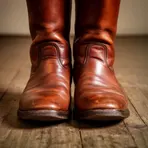
Last without much damage after long use
 155
2.8
155
2.8
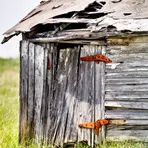
To break into pieces or stop working properly
 146
5.9
146
5.9
To get worse in quality, condition, or value
 57
4.1
57
4.1
To stop working or run out so nothing is left
 27
4.1
27
4.1
Slowly make a person or thing weaker by repeated pressure
 27
5.3
27
5.3
To get torn and ragged from age or use
 24
4.7
24
4.7
Stop working, especially things like lights or fuses, because they get too hot from too much use
 4
4.2
4
4.2
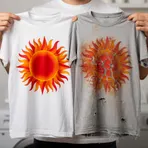
Become faded or damaged from use
 2
3.8
2
3.8
To slowly remove material by rubbing or long use
 1
5.6
1
5.6
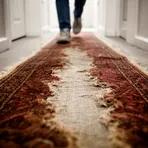
Become thin or damaged from use, like a carpet

To rub something so it becomes damaged at the edges
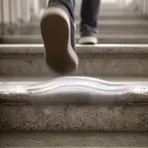
To wear a surface down by rubbing

To damage something by heat or long, heavy use
Antonyms

How Worn

Surface Forms
Morphology
wear + out
The meaning 'to make very tired / to use until no longer able to function' follows directly from 'wear' (to be worn down by use) combined with the particle 'out' signaling completion or extent, so learners who know the parts can often infer the sense for objects. However, the extension to causing a person to become exhausted is somewhat metaphorical rather than strictly literal, so the relation is only partially predictable without prior exposure.
Etymology
Wear out comes from the image of something being used so much that it slowly breaks. Think of shoes: walking many miles makes the sole thin and then a hole appears, so the shoe is 'unusable', and the parts wear meaning 'rub away' and out meaning 'completely' show this image. That's why wear out means 'to become unusable or damaged' after long use.