

to give out
 57
4.1
57
4.1

- phrasal verb
- /ɡɪv aʊt/
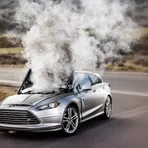
- The old car finally gave out on the highway after years of service.
Loading YouTube…
Watch on YouTubeIt's like your, your body gives out at my father's grave.
- It's like your, your body gives out at my father's grave.
- You know, my kind of body kind of gave out on me.
- As far as I know today, yes, I'm doing well, but my body gives out with no warning.
- What will happen is is that when that gives out, gravity will overwhelm the star.
- Let me take off these shoes and take a break y'all, because my ankles be given out.
- And at some point the radio gives out and then they want to drink and dance because this is their holiday.
Examples
-
As far as I know today, yes, I'm doing well, but my body gives out with no warning.
-
And you never know when your brain is going to give out on you.
Academic text (2007) -
And at some point the radio gives out and then they want to drink and dance because this is their holiday.
-
Until the truck gives out somewhere.
-
My old arm's giving out.
-
It's only a matter of time before that knee gives out on him.
-
One more summer of commuting, and my heart is going to give out, too.
Fiction book (1999) -
Amy wondered as she descended the stairs if her legs were going to give out under her.
Fiction book (1991) -
I sat quickly, feeling my legs soften and threaten to give out from under me.
Fiction book (1995) -
And all of a sudden my knee gave out and I just had a flash of the headlines in the Assisi Daily News.
Synonyms
 ∞
5.6
∞
5.6
To stop working or start to fail
 937
1.9
937
1.9
Use all of something so none is left
 498
4.6
498
4.6
To stop working, often suddenly
 370
2.2
370
2.2
Stop working properly, as a machine or part
 194
3.2
194
3.2
To stop working because of a problem
 35
4.2
35
4.2
Break or fail because of pressure
 33
3.5
33
3.5
Stop working and need repair
 26
2.3
26
2.3
To get damaged or stop working after long use
 14
2.6
14
2.6
To stop working after being used for a long time
 7
8.1
7
8.1
To stop working suddenly or to fall asleep because of tiredness
 4
8.1
4
8.1
To die or stop working after a long time of problems
Antonyms

How Broken

Surface Forms
Morphology
give + out
The meaning 'to give or distribute' is directly derived from combining 'give' (to supply) with the particle 'out', which conveys outward distribution or handing things around; a B1 learner who knows both constituents can infer this sense. This verb+particle composition is a common, productive pattern in English (and has parallels in many languages), so the expression is transparently compositional.
Etymology
The verb give out comes from the idea of something trying to give its power or strength out until there is none left; when a machine or a body can no longer give out, it stops working. So, the phrase means 'to stop working' or 'to become used up'.