

to go bad
 33
3.5
33
3.5

- phrasal verb
- /ɡoʊ bæd/
- US
- Inevitably, sooner or later, something goes bad on them and it breaks down.
- engine goes bad
Loading YouTube…
Watch on YouTubePlus, you know, if things go bad, you're the one on the hook.
- Plus, you know, if things go bad, you're the one on the hook.
- And if those loans went bad, it could break the peg of Tether, right?
- So these guys here are collapsing because the collateral is going bad.
- And one of the things I learned in in making the movie is when things went bad, when things went wrong, everyone runs for cover.
- And one of the things I think I try to show in the madness of crowds is the economics went bad and we sort of pretended that that wouldn't have consequences.
- And so, you know, your, your serotonin uptake goes bad and you start to get depressed and now you're in a big problem.
- Thus, if some of the loans go bad, the shareholders take the hit and not the depositors.
- But I do believe that if earnings go bad this week, we will be at the beginning of a recession.
- In fact, last year I had many, many months where we lost money because I had real estate deals that went bad.
- We learn a little bit more about the control person, that he was part of a operation that went bad.
- They I was in my car and everything was going bad.
- As Detroit has found, when things go bad for automobiles, there's a lot of political howling.
- attentive caution because, well, as I said, things can go badly wrong, but I can't think of a time
- If you're the one who wants out, you're leaving this relationship is going to go badly.
Examples
-
The incubator's gone bad and we're likely to lose a lot of our chicks.
-
Things started to go bad when the pressmen at the newspaper went out on strike.
Fiction book (1995) -
Okay, if this goes bad, drive off.
-
Pete, how long you have before that engine goes bad?
-
Plus, you know, if things go bad, you're the one on the hook.
-
Today, though, many of the loans financing these huge infrastructure projects are going bad, and they're going bad in record numbers.
-
The head may have gone bad, and the drive could be about to fail.
-
Inevitably, sooner or later, something goes bad on them and it breaks down.
-
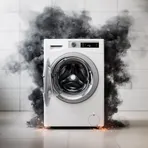
For instance, when a PC battery goes bad, you just swap in a new one.
Synonyms
 498
4.6
498
4.6
To stop working, often suddenly
 370
2.2
370
2.2
Stop working properly, as a machine or part
 194
3.2
194
3.2
To stop working because of a problem
 187
3.4
187
3.4
To stop working for a short time
 156
3.2
156
3.2
To stop working suddenly, especially for a computer or program
 155
2.8
155
2.8
To break into pieces or stop working properly
 57
4.1
57
4.1
To stop working or run out so nothing is left
 45
4.1
45
4.1
To stop working suddenly
 42
2.5
42
2.5
Stop working or lose power, for example lights
 37
3.9
37
3.9
To become worse over time in quality or condition
 35
4.2
35
4.2
Break or fail because of pressure
 27
3.9
27
3.9
To stop working or become suddenly silent
 14
2.6
14
2.6
To stop working after being used for a long time
 13
9.6
13
9.6
To stop working or trying suddenly
 11
6.8
11
6.8
To stop working or fail completely
 9
9.9
9
9.9
To go very badly and fail completely
 7
8.1
7
8.1
To stop working suddenly or to fall asleep because of tiredness
 6
4.2
6
4.2
To stop working, used for a website or system

To suddenly break or stop working in a dramatic way
Antonyms

How Broken

Surface Forms
Morphology
The phrase literally combines 'go' (come to be in a state) + 'bad' (not good/spoiled), so a learner can derive a general meaning 'become bad' from the parts. However the specific sense (spoil, become defective, or stop functioning) depends on context and is an extension of the basic compositional meaning, so the exact interpretation may not be fully predictable without exposure.
Etymology
The verb go bad is also used for machines, with the same basic image: think of a motor that slowly loses power or breaks parts. The verb go means 'become' and bad here means 'not working', so when a machine 'goes bad' it 'stops working' and needs repair.