

new
 3
5.1

- adjective
- /nuː/
- During the spring, the farmer harvested new crops before they reached full maturity.
- new crop
Loading YouTube…
Watch on YouTubeAnd they would just push new growth and be perfectly fine.
- And they would just push new growth and be perfectly fine.
- Otherwise, these new teeny tiny baby roots will rot.
- Those stocks of growth will put out new ginger roots.
Examples
-
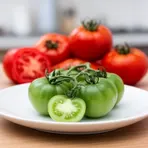
These new vegetables were picked early to ensure they are tender and flavorful.
-
So what do you kids think of these new trees?
-
Look at how pretty, how bright pink that new growth is.
-
When that happens, it encourages the formation of new young stars.
-
Those stocks of growth will put out new ginger roots.
-
Early in his career, an engineer was tasked with testing a new prototype device.
Academic text (2011) -
Implementation was generally smooth for a new program and was less cumbersome than staff had anticipated.
Academic text (2011) -
Otherwise, these new teeny tiny baby roots will rot.
-
They are Evergreen plants and new sprouts grow quite tall.
-
The gardener showed us the new seedlings that would soon grow into healthy plants.
Synonyms


Antonyms

Idioms














- Informal
 1
8.6
New ideas put into an old way that do not bring real change


Compounds

 847
1.0
A northeastern US state with Albany as capital and New York City as its largest city









 58
4.2
The continents of North and South America that Europeans settled from the late 1400s

 41
4.1
A series of government reforms and programs in the United States from 1933 to 1940 under President Roosevelt
 38
2.6
A large place in New York where people buy and sell shares of companies








 8
4.1
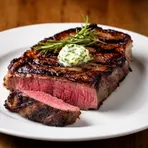
A tender cut of beef from the upper part of the cow's back often cooked as a steak




 5
4.6
A large government program of reforms and public spending based on 1930s United States policies






- Jargon
2
8.4
An effort by the Catholic Church to bring people back to faith where it is declining

 2
7.5
A movement in 1950s and 1960s French films that used new ways of telling stories and showing images

 2
5.3
A solemn Jewish festival that marks the start of the year with prayers and the blowing of a horn




 1
5.9
A monkey from Central and South America with a flat nose and often a tail that can hold things


 1
2.3
A group of islands that includes New Zealand's North and South Islands and nearby smaller islands

 1
3.3
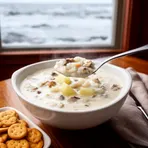
A thick creamy soup from New England made with clams, potatoes, onions, and milk
 1
4.4
A set of government programs in the 1930s in the United States to fight the Great Depression

- Literature
1
8.5
A former name for the island group now called Vanuatu in the southwest Pacific



- Archaic
1
9.5
A way of studying literature that focuses on a text's language and form, not the author's life or history



- Formal
1
8.5
A form of Latin used since the Renaissance for science, study, and naming plants and animals



 1
6.4
A very high steel arch bridge that crosses the New River at Fayetteville, West Virginia

- NSFW
1
8.4
A communist armed group formed in 1969 to fight the Philippine government

- Formal
1
9.8
A view in philosophy that the world exists by itself and can be known directly


 1
6.1
A later part of the Stone Age when people begin farming and make polished stone tools
How Ripe

Surface Forms
Etymology
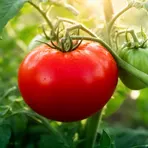
New can mean 'just grown' or 'young', and this is why cooks talk about new potatoes or peas that are fresh and tender. So new here describes crops picked early in their life.