

new-mown


 1
6.1
1
6.1
- adjective
- /nuː moʊn/
- Though it may not be so obvious as in the case of optical stimuli, the "pattern" is involved in the reception of every stimulus, whether it be the sound of a buzzer, the feel of velvet, the smell of new-mown hay, or the taste of vinegar.
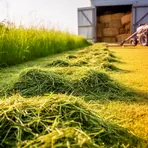
- new-mown grass
- new-mown hay
Examples
-
He disliked the smell of it, the heat of it, the ripe spread of new-mown hay.
Fiction book (1993) -
Walking through the field, I enjoyed the fresh aroma of new-mown hay on a sunny afternoon.
-
"You smell like a new-mown lawn," she told me.
Fiction book (1998) -
The neighbors brought covered dishes and covered words to the house and stood in new-mown grass by the gravesite.
Fiction book (1993) -
My eyes burned, and I smelled the faint odor of new-mown hay.
Fiction book (1994) -
There was a peculiar fragrance about Delphaeus, a scent of new-mown hay.
Fiction book (1993) -
He hugged me, and he smelled like new-mown grass, and his whiskers scratched my cheeks, and I felt that nothing could ever hurt me.
Fiction book (2000) -
Time-frame shifted drunkenly, as insensitive to circumstance as his backside was numb to the damp coolness of the new-mown grass.
Fiction book (1990) -
The scent of new-mown grass filled the air after the gardeners finished their work.
-
After the rain, the park was lush with new-mown grass, inviting everyone to enjoy the outdoors.
Synonyms

Antonyms

How Fresh

Surface Forms
Morphology
Etymology
New-mown comes from the simple parts new ('recent') and mown, the past form of mow and the same part you see in mower, meaning 'cut'. So new-mown describes grass or hay that has just been cut, and you can remember it by the fresh, sweet smell of newly cut grass.