
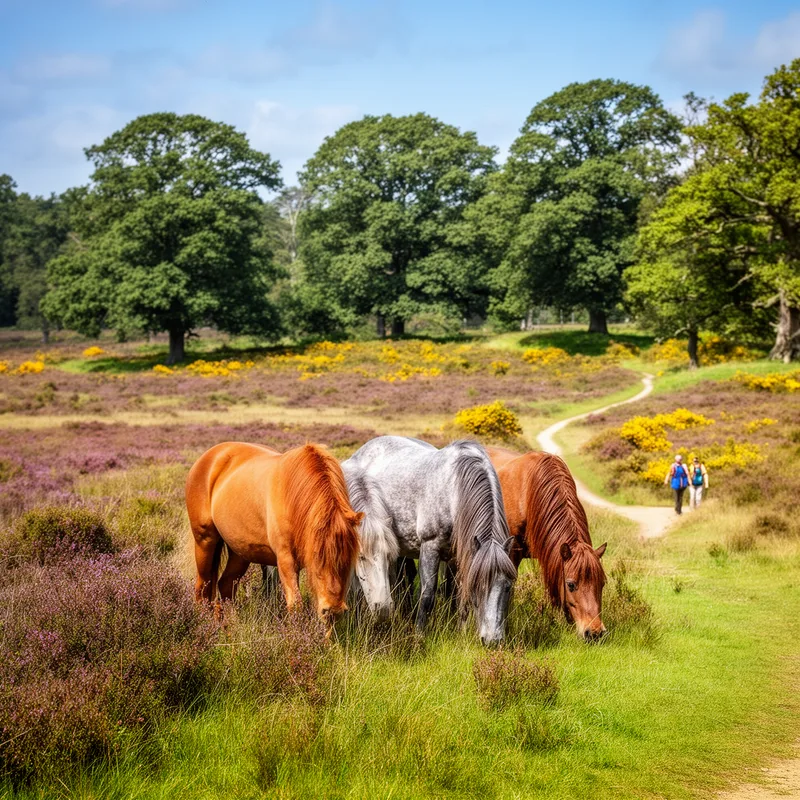
New Forest
- proper noun
- The New Forest attracts thousands of visitors each year for its scenic landscapes.
Examples
-
We spent a weekend hiking in the New Forest and saw wild ponies grazing.
-
The New Forest is famous for its wild ponies.
-
King William I established the New Forest as a royal hunting ground in the 11th century.
-
Have you visited the New Forest recently?
-
The New Forest is famous for its wild ponies that roam freely throughout the area.
-
Visitors to the New Forest can enjoy hiking trails and observe the diverse wildlife.
-
Each year, many tourists travel to the New Forest to experience its stunning landscapes.
Surface Forms
Morphology
New + forest
The phrase is clearly built from 'new' + 'forest', so a learner who knows those words will infer it refers to a wooded area; the basic notion of a forest is directly accessible. However, as a proper name it denotes a specific historical region/national park with features (royal hunting origin, wild ponies) and usage that are not predictable from the constituents, and 'New' does not necessarily mean recently created here, so full meaning requires world-knowledge.
Etymology
New Forest was set up by King William I in the 11th century as a new royal 'hunting ground', and the word forest then meant land kept for hunting rather than just trees. That's why the place is still called New Forest today and is a special park known for its wild ponies.

