

New World
 46
4.2
46
4.2

- noun
- /nuː wɜrld/
- Many Europeans set sail across the Atlantic to explore the New World in the 15th century.
- discovery of the New World
- settled in the New World
- Europe and the New World
Loading YouTube…
Watch on YouTubeBecause the trees in the New World were made of wood, just like the trees in Europe.
- Because the trees in the New World were made of wood, just like the trees in Europe.
- Even when the concusidor has found all the gold in the new world.
- And then she said that she was transported on the wings of angels to the New World.
- But yeah, this is a this is like a really strong case for recent old world contacting the New World way before Columbus ever came.
- We are the explorers of our centuries, I would say, and I'm sure it was great for Columbus to actually find the new world.
- He's the Old World vampire that is coming to check on these doofus kids that I sent to to conquer the new world, North America.
Examples
-
Jack must find his place in the New World or perish.
-
But the legend grew, and every explorer came to the New World in search of it.
-
Because the trees in the New World were made of wood, just like the trees in Europe.
-
And where did most of the slaves for the New World come from?
-
I have just returned from the New World, Majesty.
-
But life was hard there, so we set sail for the New World.
Fiction book (2000) -
There was a real problem with geographic place names in the New World.
Fiction book (1997) -
Your Highnesses, I bring you news of a New World!
-
After the discovery of the New World, the art of map-making advanced rapidly.
Academic text (1990) -
There were no tomatoes, potatoes, or maize in Europe before the discovery of the New World.
Academic text (2008)
Synonyms
 750
1.0
750
1.0
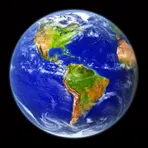
The continents of North, Central, and South America taken together
 25
2.1
25
2.1
The continents North America and South America considered together as one region
Surface Forms
Morphology
The combination 'new' + 'world' transparently signals a 'world' that is in some sense 'new' or newly encountered, so a B1 learner could guess it refers to recently discovered lands. However, the fixed historical meaning referring specifically to the Americas as used by Europeans is cultural and not fully predictable from the parts alone, so the exact referent requires prior exposure.
Etymology
New World was a name used by European explorers when they found lands across the ocean. They called them new because these places were new to them compared with the 'Old World', so New World came to mean the continents of North and South America that Europeans discovered and later settled.