

to inflame


 1
5.7
1
5.7
- verb
- /ɪnˈfleɪm/
- The chemicals in the lab can inflame the paper if spilled on it.
Examples
-
The late afternoon light inflamed their pink chests, and I could more easily distinguish then between red-eyed females and brown-eyed males.
Academic text (2009) -
Many think they cannot come to Christ until they first put away all their sin and give up all their lusts; but all your pains, before you come to the blood of Christ, will be like pouring oil upon the fire, which will inflame it even more.
Blog text (25) -
As he turned the body over to look into the face, the sunlight hit the wall, inflaming the garden.
Fiction book (1998) -
They say that in a nuclear explosion, everything inflames like paper within seconds.
-
The memory her needle had inflamed had faded, but the place where the memory had been was tender as a wound.
Fiction book (1996) -
It poured onto the filly's coat, inflaming it.
Fiction book (1995) -
A dry leaf can easily inflame if exposed to an open flame.
-
When the sparks from the fire landed on the dry grass, they inflamed it instantly.
Synonyms
 ∞
1.0
∞
1.0
To be on fire or damage something with heat
 110
3.0
110
3.0
Make something start burning
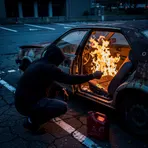 76
6.5
76
6.5
To set fire to something on purpose
 66
4.0
66
4.0
To make something start burning
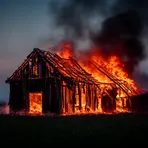 17
1.0
17
1.0
To burn something to destroy it
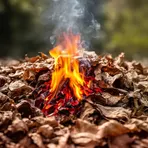 8
7.4
8
7.4
To catch fire or make something burn
 5
4.8
5
4.8
To make something start burning
 4
3.7
4
3.7
To make wood, paper, or other material start to burn
 3
4.6
3
4.6
To light up suddenly with a strong flame or bright light
 2
4.1
2
4.1
Make something start to burn
 1
5.1
1
5.1
To make something start burning
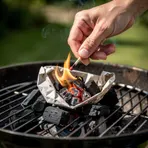 1
4.2
1
4.2
To make something start burning
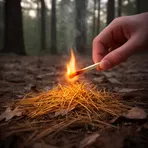
To set fire to something

To make something start to burn, like a fire or a strong feeling
Antonyms
Phrasal Verbs


- Literature
1
7.7
To make many people feel angry or shocked about something
How Hot

Surface Forms
Morphology
Etymology
Inflame comes from Latin parts in- 'in' and flamma 'flame', and it uses the same root as the English word flame. So to inflame something can mean to make it catch fire or start burning.