
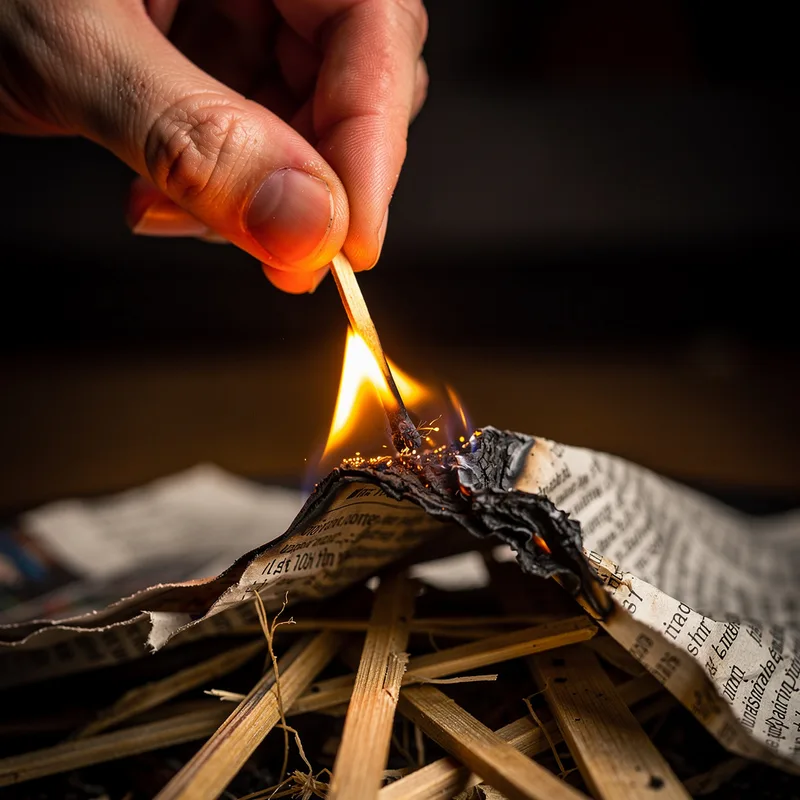
to set on fire
 110
3.0
110
3.0

- phrasal verb
- Once it starts, it just gets set on fire and keeps spreading.
Loading YouTube…
Watch on YouTubevendor that set himself on fire for the very same reason.
- vendor that set himself on fire for the very same reason.
- I would rather set it on fire, but I won't.
- vendor who set himself on fire to draw attention to his plight.
- He'd been shot, strangled and then set on fire in Epping Forest.
- And but so they set the sack on fire and I escaped.
- And the house is set on fire.
- I remember my first murder, he had set his boss on fire.
- Yeah, I've been shot, I've been stabbed, I've been set on fire.
- He literally told me stories about him being set on fire.
Examples
-
The officer's car had been set on fire after he made some arrests.
Academic text (2009) -
In some dumps, the people set the garbage on fire and scavenge the waste that is left.
Academic text (2002) -
Their car was set on fire.
-
Now set that flag on fire.
-
But Amber set the church on fire.
-
We can't leave him alone here; he'll set the damn place on fire.
Fiction book (1997) -
Cover the stove hole or you'll set the whole pan on fire.
Fiction book (1991) -
Dean rips off his sweater, takes out a lighter, and sets the sweater on fire.
Fiction book (1998) -
The campers accidentally set on fire their tent while trying to cook dinner.
-
The arsonist was arrested after he set on fire the abandoned building.
Synonyms
 ∞
1.0
∞
1.0
To be on fire or damage something with heat
 76
6.5
76
6.5
To set fire to something on purpose
 66
4.0
66
4.0
To make something start burning
 8
7.4
8
7.4
To catch fire or make something burn
 5
4.8
5
4.8
To make something start burning
 4
3.7
4
3.7
To make wood, paper, or other material start to burn
 2
4.1
2
4.1
Make something start to burn
 1
5.1
1
5.1
To make something start burning
 1
4.2
1
4.2
To make something start burning


 1
5.7
1
5.7
To make something start burning, for example paper or dry grass

Set on fire so it is burning

Made to burn and give a warm, soft light
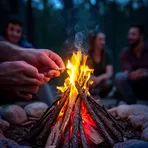
To make something start to burn, like a fire or a strong feeling
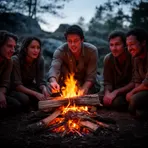
Causing something to burn or someone to feel a strong emotion
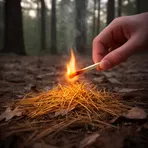
To set fire to something
Antonyms
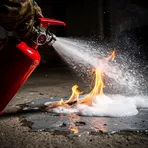

How Alight

Surface Forms
Morphology
The meaning 'to cause something to begin burning' is directly derivable from combining 'set' (to cause or initiate) with the prepositional link 'on' and 'fire' (burning). This cause→result compositional pattern is cross-linguistically common and follows ordinary English verb + preposition + noun structure, so a B1 learner who knows the constituent words would understand the expression.
Etymology
The phrase set on fire comes from the simple image of putting a flame to something: you set a match to dry wood and it catches fire. So it means 'to cause something to burn', whether by accident or on purpose.