

to burn up
 3
4.6
3
4.6

- phrasal verb
- /bɜrn ʌp/
- When the meteor entered Earth's atmosphere, it lit up the night sky, burning up in a brilliant display.
- burning up in the atmosphere
Examples
-
Emmit, they got a couple of gas lines burning up Fairfax.
-
Monica: Benjy is burning up with a fever.
Fiction book (2000) -
No, it's so hot, I'm burning up.
-
l got Bennett burning up the phone lines every day.
-
I guess 'cause I... I burn up so many calories.
-
He was burning up but looked cool in his seersucker.
Fiction book (2002) -
Your head's burning up.
Fiction book (2000) -
As the spacecraft reentered the atmosphere, it began to burn up due to the intense friction with the air.
-
Firefighters managed to contain the blaze before it could burn up the entire forest.
Synonyms
 181
2.3
181
2.3
To produce light and heat from fire
 121
3.0
121
3.0
To destroy a building or object completely by fire
 64
2.5
64
2.5
Begin to shine or make something begin to shine, for example by burning
 58
3.4
58
3.4
To burn or shine with very bright light
 43
4.4
43
4.4
To be destroyed by fire
 34
1.7
34
1.7
To burn or shine with a bright, hot light
 32
2.6
32
2.6
To start burning suddenly
 23
4.7
23
4.7
To become suddenly stronger or worse, often for a short time
 18
4.2
18
4.2
To burn or shine with a sudden bright light
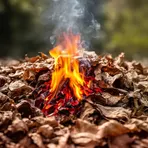 8
7.4
8
7.4
To catch fire or make something burn
 6
3.2
6
3.2
Become used up by fire or slowly disappear over time from heat and light
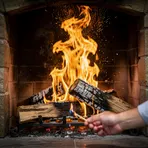 1
4.6
1
4.6
To suddenly start burning strongly or become much more intense


 1
4.9
1
4.9
To start burning with a strong bright flame
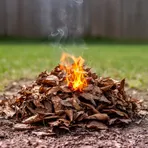 1
4.8
1
4.8
Start burning and produce flames

To catch fire suddenly
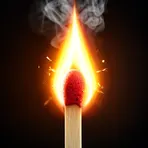
To start to burn suddenly and brightly
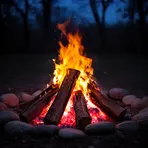
To burn with a bright flame or glow
Antonyms

How Bright

Surface Forms
Morphology
burn + up
The meaning 'to be completely destroyed or consumed by fire' is compositionally derivable from 'burn' (to be consumed by fire/consume) plus the particle 'up', which commonly adds a completive/totality sense. This phrasal-verb pattern is frequent and cross-linguistically accessible, so a B1 learner who knows the constituent words would likely infer the intended meaning.
Etymology
The phrase burn up comes from the sight of a flame suddenly flaring up and growing very bright, like a campfire that bursts into light. That's why it can mean 'to burn more brightly' for a short time.