

to flame up
 1
4.6
1
4.6

- phrasal verb
- /fleɪm ʌp/
- Flame up, Soccer Kid!
Examples
-
She didn't react, and as quickly as his anger had flamed up, it was gone.
Fiction book (2001) -
The coals will always be smoldering, ready and waiting for new fuels to flame up again.
Blog text (4) -
Turn the flame up high.
Fiction book (1998) -
Then Gaza flames up, testing the IDF.
Blog text (19) -
Make sure you the olive oil stays stays at a proper temperature so it doesn't flame up on you or start a fire.
-
The breakfast fire was still burning in the big stove and flamed up when Joze slid in more sticks.
Fiction book (1993) -
Berryman's personality hovered on simmer and often flamed up to boil.
Fiction book (1991) -
She triumphantly brings the fat flame up to her fat smoke, lighting it up, then loudly snaps the Zippo closed.
Fiction book (1994) -
She had lit another of the little black cigars, and I saw how she pressed the dancer's head once or twice and made the torch flame up.
Fiction book (1995) -
The campfire flamed up when we added more logs to it.
Synonyms
 181
2.3
181
2.3
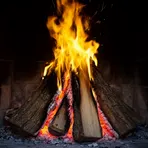
To produce light and heat from fire
 123
4.2
123
4.2
To suddenly start in a strong or violent way, often showing strong feeling
 70
4.1
70
4.1
Make people feel excited and ready to act
 57
3.4
57
3.4
To become more intense or make a situation more intense
 52
4.1
52
4.1
To rise very quickly to a high level
 51
4.4
51
4.4
To become suddenly more intense, often about anger or violence
 51
3.4
51
3.4
To rise suddenly and sharply
 41
3.7
41
3.7
To rise suddenly and strongly in amount or number
 34
1.7
34
1.7
To burn or shine with a bright, hot light
 25
4.1
25
4.1
Rise quickly to a much higher level
 23
4.7
23
4.7
To become suddenly stronger or worse, often for a short time
 4
8.2
4
8.2
To become suddenly very angry and lose control
 3
4.6
3
4.6
To light up suddenly with a strong flame or bright light
 3
7.7
3
7.7
Explode like a star and become suddenly very intense or famous
 2
3.4
2
3.4
Start suddenly and appear or happen quickly
 2
4.4
2
4.4
Increase very quickly to a much higher level
 2
5.7
2
5.7
To rise very quickly to a much higher level
 1
6.7
1
6.7
Become suddenly stronger or easier to notice after a quiet time

 1
4.8
1
4.8
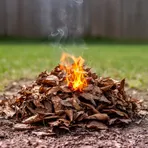
Start burning and produce flames
 1
7.7
1
7.7
To become more active or exciting in a situation

To catch fire suddenly
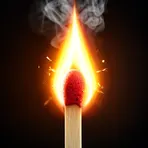
To start to burn suddenly and brightly

Rise quickly to a much higher level, for example prices or temperatures
Antonyms

How Intense

Surface Forms
Morphology
The meaning is directly derivable from 'flame' (to burn/shine) combined with the particle 'up' which signals increase or sudden onset, so 'flame up' naturally means to catch fire suddenly or grow more intense. This verb+up compositional pattern is productive in English (cf. 'flare up', 'heat up') and would be understandable to a B1 learner who knows both constituents.
Etymology
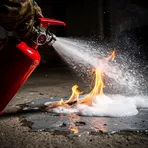
The phrasal verb flame up gives the image of a small fire suddenly growing into bright flame that rises up into the air. So it now means 'to suddenly catch fire' or 'to become much more intense'.