
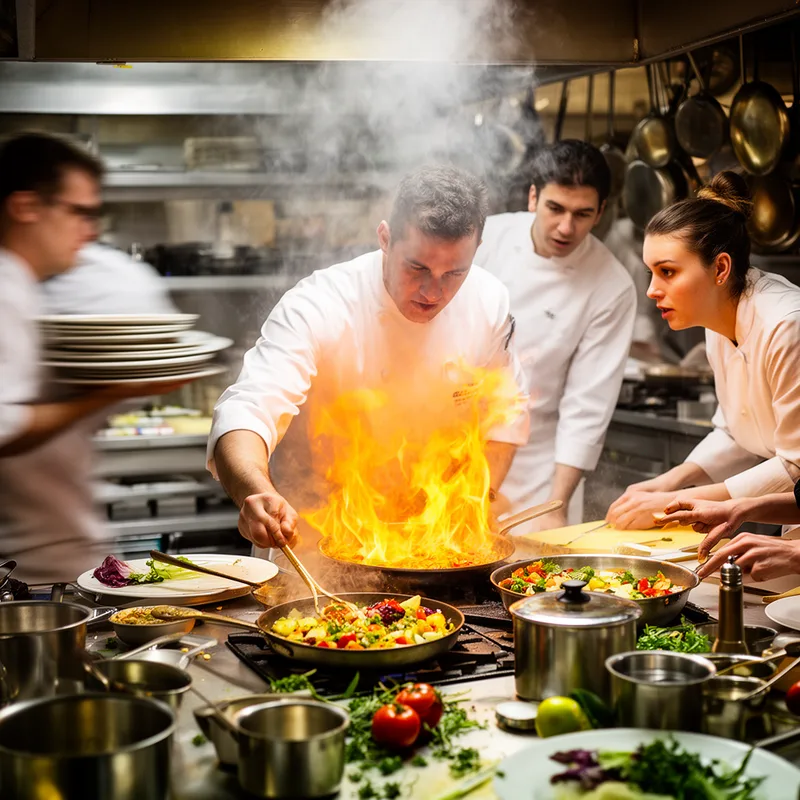
to hot up

to hot up

1 7.7
To become more active or exciting in a situation
  • phrasal verb
  • /hɒt ʌp/
  • UK
translation icon : intensificarse
  • Things began to hot up when the debate turned to controversial topics.

Examples

  • The dance floor is hotting up!

  • "The male-female war is hotting up," Weldon wrote in her first novel (FW, 98).

    Fiction book (1993)
  • The competition is really hotting up as more teams join the tournament.

  • As the party continued into the night, the atmosphere started to hot up with more laughter and music.

Synonyms

to escalate
vsto hot up
220 5.5

To become larger, more serious, or more intense

stresses growing activity and liveliness rather than increased severity
to step up
vsto hot up
74 3.4

Make something greater in amount, speed or strength

is about becoming more intense or active rather than only measurable increases
to fire up
vsto hot up
  • Informal
70 4.1

Make people feel excited and ready to act

means general intensification or activity rather than only emotional arousal
to liven up
vsto hot up
  • Informal
66 3.9

To make or become more active and interesting

means becoming or making things more intense or active, not only energy
to excite
vsto hot up
64 2.7

To make something more active, alert or interested

describes a broader rise in intensity and liveliness rather than only stimulation
to heat up
vsto hot up
57 3.4

To become more intense or make a situation more intense
is chiefly British in usage rather than neutral elsewhere
to ramp up
vsto hot up
47 4.1

To increase something, especially its amount or speed

is less technical and more about sudden energy or excitement rise
to crank up
vsto hot up
  • Informal
39 3.8

To increase the level or strength of something, for example volume, production

focuses on activity and liveliness rather than mere level increase
to pump up
vsto hot up
  • Informal
28 4.1

Make someone feel excited and full of energy

is broader, also meaning general rising intensity not only enthusiasm
to turn up the heat
vsto hot up
26 4.2

Make a situation more urgent to force someone to act

is more general, meaning grow in intensity without pressing or forcing action
to shoot up
vsto hot up
25 4.1

Rise quickly to a much higher level

is about becoming more intense or exciting, not only sudden numeric jumps
to spice up
vsto hot up
  • Informal
23 3.9

To make something more interesting or exciting

is more about rising intensity or activity rather than added interest alone
to get heated
vsto hot up
20 4.2

Become angry or excited during a discussion

is wider, covering lively or exciting changes beyond heated argument
to perk up
vsto hot up
  • Informal
16 3.1

Become more lively and cheerful after feeling tired or sad

is broader, not limited to recovery from tiredness
to electrify
vsto hot up
14 4.1

To make people feel very excited and want to act

is broader, covering steady rise in intensity rather than sudden thrills
to enliven
vsto hot up
6 4.1

Make something more active and interesting

is broader, stressing increased intensity and excitement beyond simple energy
to charge up
vsto hot up
  • Informal
4 4.8

To make people feel excited and ready to act

focuses on rising intensity or activity beyond just emotional arousal
to pep
vsto hot up
  • Informal
4 4.9

To make someone or something more lively

is about stronger activity or excitement rather than simple liveliness
to pep up
vsto hot up
  • Informal
3 4.1

Make someone or something more lively and interesting

is broader, including increased intensity and excitement beyond a small energy boost
to hype up
vsto hot up
  • Informal
3 5.6

To make someone feel very excited about something

is about general intensification rather than focused pre-event excitement
to rocket up
vsto hot up
2 4.4

Increase very quickly to a much higher level

focuses on rising excitement or activity rather than numeric increase
to jazz up
vsto hot up
  • Informal
2 5.1

Make something more interesting and lively, like a room or outfit

is often about general intensification, not only stylistic liveliness
to quicken
vsto hot up
2 5.1

To make a feeling or desire stronger

refers more to action and activity increase rather than internal sharpening
to stoke up
vsto hot up
  • Informal
1 5.4

To add fuel to a fire or make energy and excitement stronger
applies to excitement growth generally, not only fueling causes
to flame up
vsto hot up
1 4.6

To suddenly start burning strongly or become much more intense

is broader, meaning become or make more active or exciting without suddenness
to rev up
vsto hot up
  • Informal
1 4.6

To make something faster or more active

is broader, covering increased intensity beyond just speed
intensifying
vsto hot up
3.7

Becoming stronger or more intense

focuses on activity or liveliness rather than only strength
to enflame
vsto hot up
6.4

To make feelings like anger or excitement stronger

is more neutral, indicating general intensity not only strong emotion
to turn heated
vsto hot up
6.3

Become angry or excited in a discussion

is broader and can mean general increase in activity or excitement
6.1

To work much harder and faster to get something done

is less extreme, referring to becoming more active without maximal effort
to whip up a storm
vsto hot up
  • Informal
6.8

To make food quickly or to cause strong excitement

is more neutral growth in intensity rather than deliberately causing commotion
to kick up excitement
vsto hot up
4.4

Make people more interested and eager about something

is about general rise in intensity or activity, not only strong interest creation
to juice up
vsto hot up
  • Informal
6.7

Make an event like a party more lively and exciting

is a broader idea of becoming more intense or active beyond added energy
to ginger up
vsto hot up
  • Informal
8.1

To make something more lively or exciting

is general intensification in activity and excitement rather than just liveliness
to brisk up
vsto hot up
6.6

Get more lively and active

is more about intensity and excitement rather than simply quick movement

Antonyms

to calm down
  • Informal
594 1.4

To become less angry, excited, or upset

to cool down
  • Informal
19 2.5

Feel less angry or excited

How Intense

to escalate
220 5.5
to intensify
110 4.0
to heat up
57 3.4
to hot up
  • UK
1 7.7
to liven up
  • Informal
66 3.9
to perk up
  • Informal
16 3.1

Surface Forms

hot up infinitive
hotted up past
hotted up past participle
hotting up present participle
hots up third person singular

Morphology

hot + up

The particle 'up' signals increase and 'hot' conveys higher intensity, so a learner could infer a general sense of making something more powerful or intense. However, the specific mechanical sense of tuning or modifying parts to improve an engine is metaphorical/specialized (and could be confused with 'heat up'), so the meaning is only partly predictable from the constituents.

Etymology

Hot up uses the idea of rising heat as a picture: when a meeting, argument, or event gets more heated it feels like a room getting warmer. So hot up means 'to become more intense or exciting'.