

to take fire


 1
4.8
1
4.8
- phrasal verb
- /teɪk faɪər/
- And the curtains took fire.
Loading YouTube…
Watch on YouTubeA lot of people will ask, because it seems quite amazing that you managed to take fire in the booth from the BBC to Apple.
- A lot of people will ask, because it seems quite amazing that you managed to take fire in the booth from the BBC to Apple.
Examples
-
We'd just seen the old Sutherland take fire, and Cap'n Elliott says to us, he says, sir,
Blog text (7) -
A lot of people will ask, because it seems quite amazing that you managed to take fire in the booth from the BBC to Apple.
-
The dry grass took fire quickly in the strong wind.
-
As the campfire grew larger, a nearby log took fire easily.
-
When the candle tipped over, it took fire and spread to the tablecloth.
Synonyms
 ∞
1.0
∞
1.0
To be on fire or damage something with heat
 66
4.0
66
4.0
To make something start burning
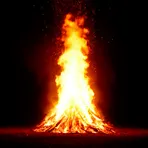 58
3.4
58
3.4
To burn or shine with very bright light
 34
1.7
34
1.7
To burn or shine with a bright, hot light
 32
2.6
32
2.6
To start burning suddenly
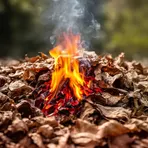 8
7.4
8
7.4
To catch fire or make something burn
 3
4.6
3
4.6
To light up suddenly with a strong flame or bright light
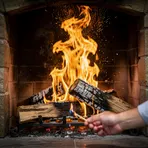 1
4.6
1
4.6
To suddenly start burning strongly or become much more intense
 1
4.9
1
4.9
To start burning with a strong bright flame

To catch fire suddenly
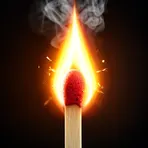
To start to burn suddenly and brightly
Antonyms

How Fast

Surface Forms
Morphology
take + fire
The phrase is compositionally built from 'take' (in the sense 'to receive' or 'sustain') + 'fire' (gunfire), so the military sense 'to come under attack/receive gunfire' is partially derivable from the parts. However, it relies on a less frequent sense of 'take' and must be disambiguated from the common meaning 'take fire' = 'catch fire/ignite', so a B1 learner may not reliably infer the intended meaning without prior exposure.
Etymology
The verb take fire comes from the simple image of take meaning 'get' and fire meaning flames. Imagine dry leaves that catch a small spark and then burn, so the phrase means 'to begin to burn'.