
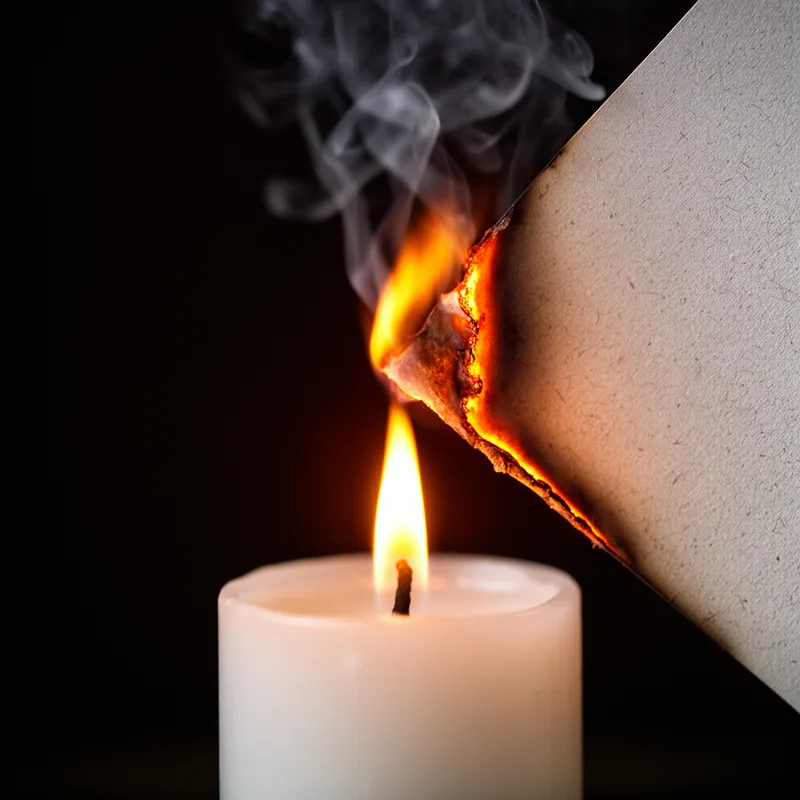
to catch fire
 32
2.6
32
2.6

- phrasal verb
- /kæʧ faɪər/
- The car suddenly caught fire while driving on the highway, forcing the driver to pull over.
Loading YouTube…
Watch on YouTubeIn other words, would the car have caught fire?
- In other words, would the car have caught fire?
- The dude in the front climbs to the back because the car catches fire in the front.
- They come in and we turn it on and damned if the power supply doesn't catch fire and burn up on the spot.
- Now, like we were saying earlier in this video, it's tough to prove that something won't catch fire from anything at all ever.
- The company says right, Yes, I bet you your house won't catch fire and just I bet you my house will, right.
- But then it's so dry because of the droughts, the everything else catches fire and it just kills off so many, so many different things.
- The driver claims who survived that they lost all control of the car and the vehicle caught fire.
- When this catches fire, are Oscar and Andres ready?
Examples
-
Why has this idea just not caught fire at all here in the United States?
Academic text (1996) -
One night, the building caught fire, and my Johnny tried to put it out.
Fiction book (2001) -
One of the engines caught fire.
-
Later, they lost more supplies when their camp caught fire, and they had to leave boxes behind.
Academic text (2007) -
I was seven the year the house caught fire, probably from standing ash.
Fiction book (1990) -
A ferry caught fire as it came to dock.
-
And the car caught fire, and he got trapped in the wreck.
-
That bush in the front yard, if it catches fire tonight, you will let me know?
-
Dead leaves, paper dust and oil stains on and around the engine can catch fire.
-
The dry kindling immediately caught fire, and the moist twigs began to smoke.
Fiction book (1996)
Synonyms
 ∞
1.0
∞
1.0
To be on fire or damage something with heat
 66
4.0
66
4.0
To make something start burning
 8
7.4
8
7.4
To catch fire or make something burn
 3
4.6
3
4.6
To light up suddenly with a strong flame or bright light
 1
4.6
1
4.6
To suddenly start burning strongly or become much more intense

 1
4.8
1
4.8
Start burning and produce flames
 1
4.9
1
4.9
To start burning with a strong bright flame

To catch fire suddenly
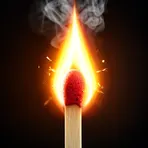
To start to burn suddenly and brightly

Set on fire so it is burning
Antonyms
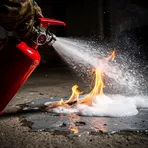

How Intense

Surface Forms
Morphology
The literal meaning 'to start burning' is directly compositional from 'catch' + 'fire', but the target sense 'to become very popular / spread quickly' is a metaphorical extension based on the image of fire spreading. This mapping is partly predictable and cross-linguistically common, so learners who know the constituents may infer the figurative sense only with some metaphor awareness rather than full transparency.
Etymology
Catch fire comes from the simple image of something suddenly starting to burn: a spark or heat makes the object catch fire. So it means 'to start burning'.