

to conflagrate
- verb
- /kənˈflæɡəˌreɪt/
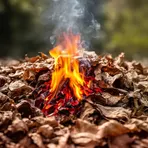
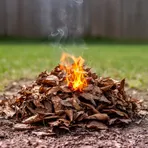
- Dried leaves can easily conflagrate in extreme heat.
Examples
-
Experts warned that the chemicals could conflagrate if not stored properly.
-
After the short circuit, the wires began to conflagrate within seconds.
-
The dry leaves conflagrated quickly in the heat.
-
Why did the old barn conflagrate so rapidly?
-
The old building began to conflagrate after the lightning strike ignited the dry wooden beams.
-
The scientists warned that the chemicals could conflagrate if they were not stored properly.
-
During the heatwave, a small spark could conflagrate the entire forest.
Synonyms

 66
4.0
66
4.0

To make something start burning
 32
2.6
32
2.6
To start burning suddenly
 23
4.7
23
4.7
To become suddenly stronger or worse, often for a short time
 8
7.4
8
7.4
To catch fire or make something burn
 3
4.6
3
4.6
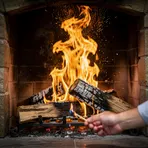
To light up suddenly with a strong flame or bright light
 1
4.6
1
4.6
To suddenly start burning strongly or become much more intense

 1
4.8
1
4.8
Start burning and produce flames
 1
4.9
1
4.9
To start burning with a strong bright flame
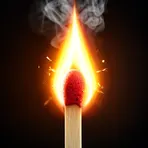
To start to burn suddenly and brightly
Antonyms
How Intense

Surface Forms
Morphology
conflagrate = conflagration (semi-transparent) = con + flagr + ate
The intransitive sense (to catch fire) is still predictable from 'conflagration' and the verb-forming pattern, but the usage is less regular and the verb is uncommon.
Etymology
Conflagrate comes from Latin parts con- 'together' and flagrare 'to burn', the same root as flame. Imagine a small spark making many things catch fire at once — so conflagrate can mean to burst suddenly into large flames or to catch fire quickly.