

to enclose
 84
3.7
84
3.7

- verb
- /ɪnˈkloʊz/
- Concentrations of air pollutants within enclosed places often exceed concentrations found in outdoor ambient air.
- enclosed spaces
- enclosed area
- fully enclose
Loading YouTube…
Watch on YouTubeOne way to do that is to build a sphere around it that completely encloses that star.
- One way to do that is to build a sphere around it that completely encloses that star.
- What an architect does at her or his essence is enclose a bit of space by putting up walls, a floor, and the ceiling.
- So, so this enclave of Anata where the characters in my book live is completely surrounded and enclosed.
- The Romans for the first time made it possible to enclose space and corvats.
- So this is a stack basically, and it encloses A flare like this flame.
Examples
-
Eastman House has no number and is enclosed by a high hedge.
Academic text (1999) -
So the goal is enclose more territory, expand your fence.
-
One way to do that is to build a sphere around it that completely encloses that star.
-
What an architect does at her or his essence is enclose a bit of space by putting up walls, a floor, and the ceiling.
-
Most of the genetic material in human cells is enclosed within a structure called a chromosome.
Academic text (1992) -
When complete, the Crystal Palace enclosed a total of 33 million cubic feet of space.
Academic text (2008) -
Meers stopped the car just outside an enclosed doorway, guarded by a single security policeman.
Fiction book (1991) -
Chatham's Nauset Beach is typical of the landforms enclosing thousands of miles of the coastal United States.
Academic text (1990) -
The garden will be enclosed by a tall wooden fence to keep out deer.
-
They decided to enclose the swimming pool with a glass barrier for safety.
Synonyms
 ∞
1.0
∞
1.0
To put something over another thing to protect or hide it
 ∞
1.7
∞
1.7
To be all around a person or thing on every side
 729
1.0
729
1.0
To cover something by putting material around it
 457
2.5
457
2.5
To close something tightly to stop air or water getting in
 215
4.2
215
4.2
Keep someone or something within limits, for example in a small space
 89
3.2
89
3.2
To hold something inside a building or container
 47
3.9
47
3.9
Stop people from entering or leaving an area by blocking it
 42
4.8
42
4.8
To stop people from entering a place by putting up a barrier
 41
4.5
41
4.5
To surround something completely, like fog or darkness
 41
6.4
41
6.4
To surround an area with a wall to protect it
 34
4.9
34
4.9
To cover something completely so nothing can get in or out
 24
5.8
24
5.8
To block off an area with people or barriers to keep people away
 19
2.4
19
2.4
To put a barrier around land to mark or protect it
 15
3.9
15
3.9
Close something tightly so air, water, or flavor cannot escape
 15
3.7
15
3.7
To bring the edges of something together so there is no gap
 7
5.8
7
5.8
To build a barrier around something to keep people in or keep others out
 7
1.8
7
1.8
To make a barrier of wood, metal, or wire around land to keep animals and people out
 6
5.6
6
5.6
To cover something completely, as if by a blanket or mist
 4
3.7
4
3.7
Surround an area with a fence to stop people from entering
 3
6.1
3
6.1
Close an opening by building a wall across it
 3
3.0
3
3.0
To surround an area with a barrier to keep others out
 1
3.7
1
3.7
To surround an area with bushes to make a living fence
 1
1.9
1
1.9
Close something tightly so nothing can get in or out


 1
8.0
1
8.0
To cover something completely, often by surrounding it with cloth or paper
 1
8.8
1
8.8
To surround something on all sides
 1
9.0
1
9.0
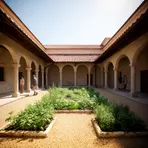
To surround a courtyard with a covered walkway

Surround something completely on all sides to shut it in

Completely surround something, often in a round shape like a ball

Surround something completely so it cannot get out or move

To build a wall around something to protect or separate it

Surround a place or person so they cannot move freely
Antonyms
How Enclosed

Surface Forms
Morphology
Etymology
The word enclose comes from the parts en- meaning 'in' and close meaning 'shut', the same 'close' you know in English. So, to enclose something is to shut it 'in' or to surround it so it stays inside.