

to close up
 15
3.7
15
3.7

- phrasal verb
- /kloʊs ʌp/
- And now we are going to close this all up into this plain white box.
- close up the wound
- close up the house
- close up the hole
Loading YouTube…
Watch on YouTubeOK, pop this in, close it up, give it a little shake.
- OK, pop this in, close it up, give it a little shake.
- These absolute mad lads just tell you to just close it up, seal it, call it a day.
Examples
-
I was making my rounds, saw your hangar wide open, and the plane getting rained on, so I closed it up.
Fiction book (1993) -
The doctor said she would need to close up the incision carefully after the surgery.
-
So you go like that and then you almost like close it up from the top.
-
So great, so we are just going to close these up and take them inside.
-
Every time you do something like what you just did, you close that hole up even faster.
-
Will you close up the back?
Fiction book (2000) -
Then we're going to close up the side panels and call this baby ready to rock.
-
I intend to close up the front and sides with those real thin little slats," he told his wife.
Fiction book (1990) -
After the storm, we had to close up all the broken windows before it rained again.
-
Please close up the bag tightly to keep the food fresh.
Synonyms
 ∞
1.0
∞
1.0
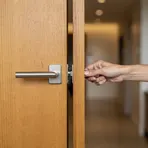
To shut something so it is not open
 ∞
3.0
∞
3.0
To stop movement, access, or progress
 457
2.5
457
2.5
To close something tightly to stop air or water getting in
 119
5.1
119
5.1
To block a path or view
 84
3.7
84
3.7
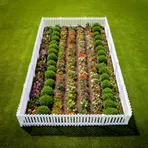
Surround something completely, often with a wall or fence
 24
3.9
24
3.9
Stop people or vehicles from entering a place
 15
3.9
15
3.9
Close something tightly so air, water, or flavor cannot escape
 5
8.4
5
8.4
Block an opening to stop the flow of liquid or air
 3
3.7
3
3.7
Close something tightly so nothing can get in or out
 3
6.1
3
6.1
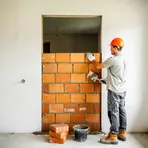
Close an opening by building a wall across it
 1
1.9
1
1.9
Close something tightly so nothing can get in or out

To block an opening to stop liquid or gas passing through

Surround something completely on all sides to shut it in

Surround something completely so it cannot get out or move
Antonyms
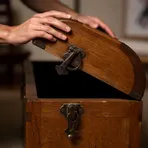
How Sealed

Surface Forms
Morphology
The meaning 'at or from a very short distance' is directly derivable from the spatial sense of 'close' (near) combined with 'up' as a directional/intensifying particle, so a B1 learner who knows those constituent senses will infer the MWE. This follows common English composition patterns (and parallels in other languages), making the expression immediately comprehensible and transparent.
Etymology
Close up comes from the image of bringing two edges together, like closing a book or stitching a wound, when you literally close up the gap so nothing is open. That's why it means 'to seal' or 'bring edges together'.